Why You Should Read Code by Charles Petzold
Honestly, I didn't expect to enjoy this book as much as I did. It is a book about how computers actually work, and it takes a quite unusual route to get there.
Honestly, I didn't expect to enjoy this book as much as I did. It is a book about how computers actually work, and it takes a quite unusual route to get there.
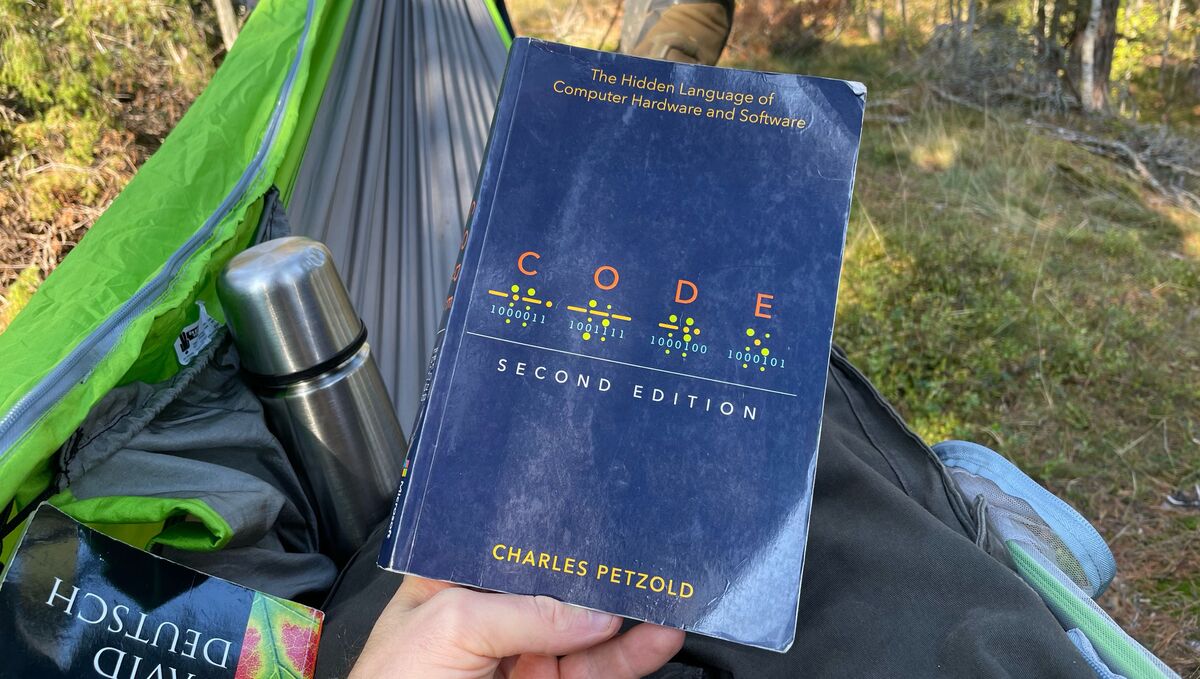
In this piece I want to explain why you should pick up this book if you want to understand our world and the future we're heading towards. This is Code by Charles Petzold, in its second edition.
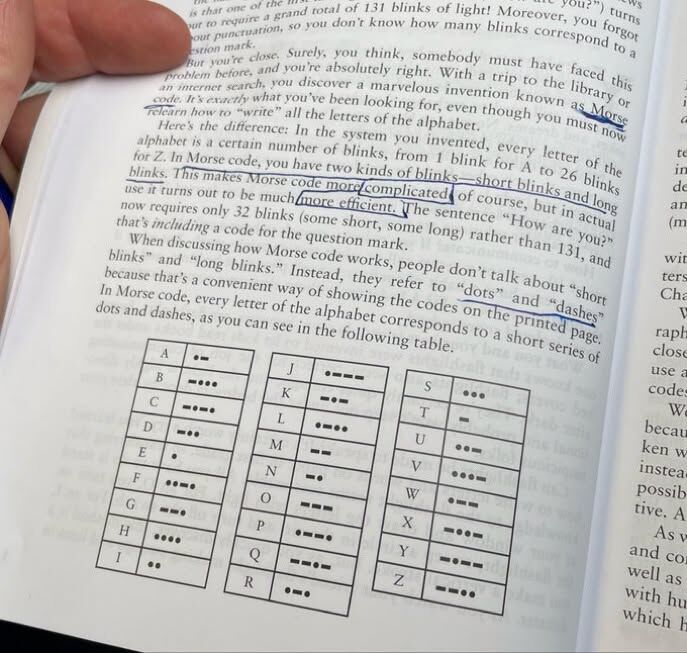
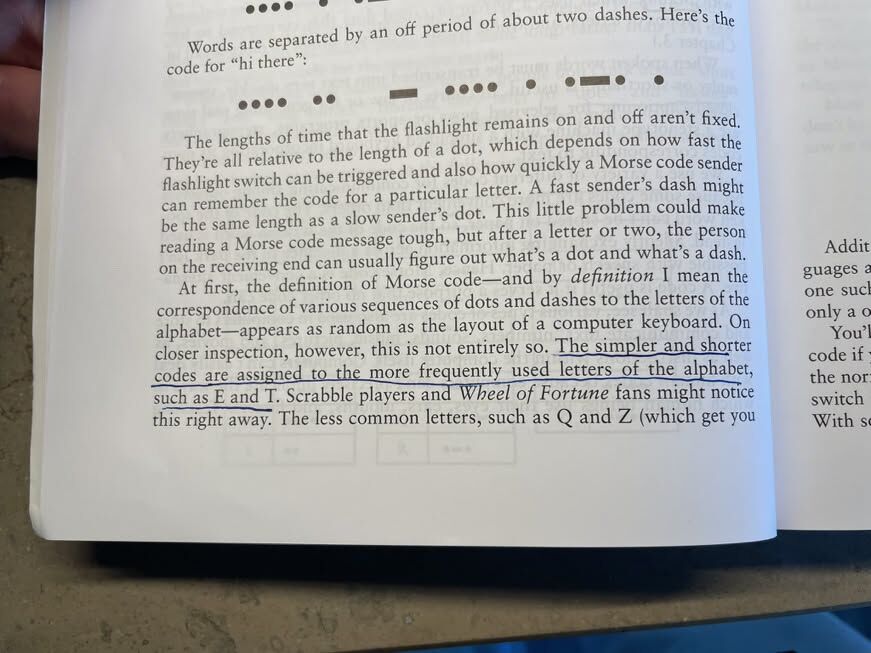
Most computer books start with the software and then kind of glance over the hardware underneath. Petzold takes another route. He starts with a flashlight. Then he explains Morse code, then exactly how a telegraph works, and he builds up from there. Relays, logic gates, binary, memory. The idea is that by the end of it, you understand why the laptop in front of you isn't just magic.
His whole approach is concrete understanding. He wants you to really know how a computer works, all the way down, without needing an engineering degree or a lab full of equipment. To do that he goes back as far as he can, and it turns out that 19th century telegraph equipment teaches basic ideas that are still at the heart of computers today. Flip a switch at one end and something happens at the other. A relay picks up a weak signal and passes it on. Wire a few relays together in the right way and suddenly you have logic: AND, OR, NAND. Those are the building blocks everything else is made of.
The same goes for binary. It's not some arbitrary choice engineers made. Once you can see how switches work, you understand why two states, on and off, is the thing that actually scales.
I have to admit that when I first started this book and looked at the pages, I was quite intimidated. I thought this would never go into my thick skull, because I'm not that technical. But lo and behold, through his extremely well planned way of teaching, it got me to understand things I thought I would never understand.
In the chapters where telegraphs and relays turn into logic gates, part of it reads like a textbook. It is a textbook, basically. But it keeps pulling me forward anyway, and that's rare for a book like this.
I've worked as a video game developer all my life, but on the graphics side, and I've never really understood the hardware part of the business. Of course I know what a motherboard is, and memory, and hard drives. But how the things on the circuit boards actually communicate was something I didn't understand at all. This book really opened my mind to how that works.
Codes are everywhere. Morse code, Braille, binary: they're all the same idea. You take meaning and map it onto a small set of symbols.
Hardware is logic you can touch. Switches wired in series or in parallel are not a metaphor for AND and OR. They are AND and OR.
Once you see the layers, you can't unsee them. The cloud stops being a vague thing up there. It's a lot of switches in a building somewhere.
It's for you if you're curious about how things really work, if you like to build stuff, or if you're tired of vague hand-wavy tech talk.
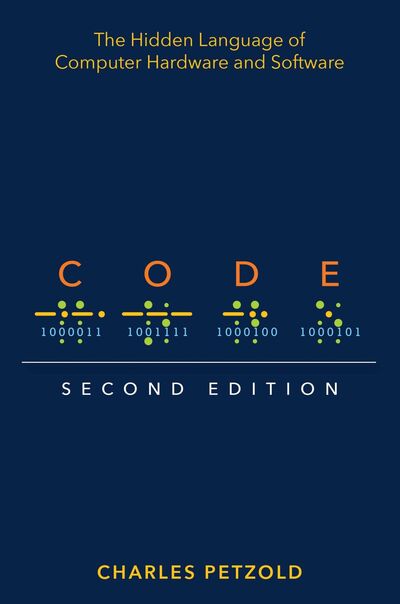
A book about how computers actually work, built from the ground up: a flashlight, Morse code, the telegraph, relays, logic gates, binary and memory. By the end, the laptop in front of you isn't magic any more.
Full review coming soon.
Petzold explains the machine. These two books sit on either side of it.
It's also a book that pairs really well with books about the web and AI. Tim Berners-Lee's memoir This Is for Everyone is about how he combined all these technologies into something very useful: the web we use every day, where everything is connected. And then we have AI on top of that. I think this is a really important part of understanding the society we live in and the foundation it's built on, because these are the bits and bytes, the relays and the switches that our digital society is built upon.
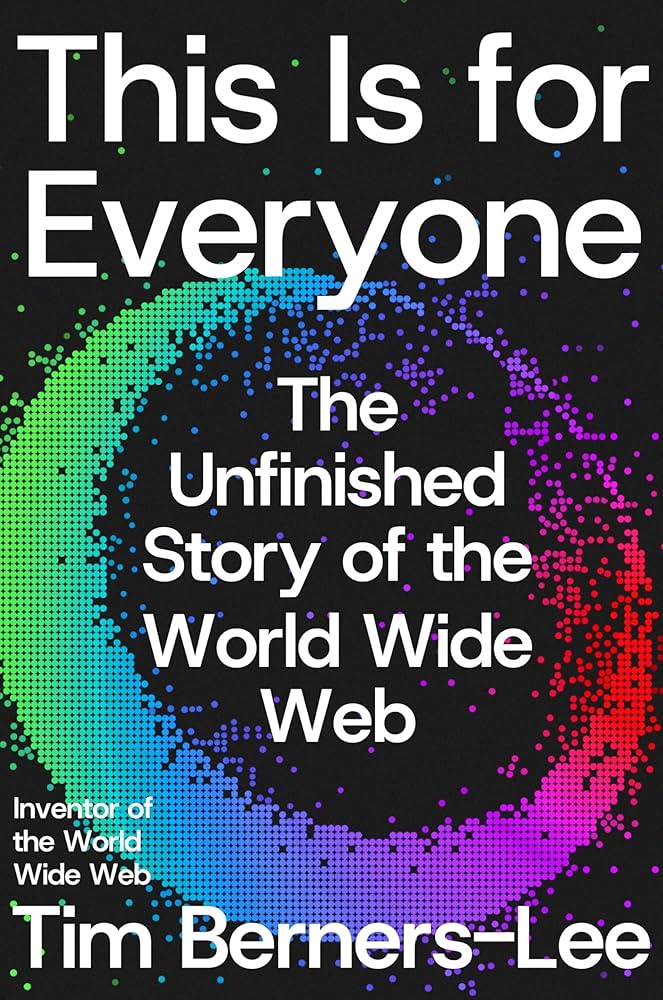
The memoir of the man who invented the web. Petzold explains the machine; Berners-Lee shows how these technologies were combined into the web we use every day.
Buy on Amazon → Read Review →The other one is The Grid, about the fraying wires between America and its energy future. I finished it the day I recorded the video, and it makes much more sense after reading Code. It's the foundation layer underneath the hardware and the code, because you won't get anywhere without electricity. It's similar in the way that it's complex: nothing is obvious, and some of the ideas are counterintuitive.
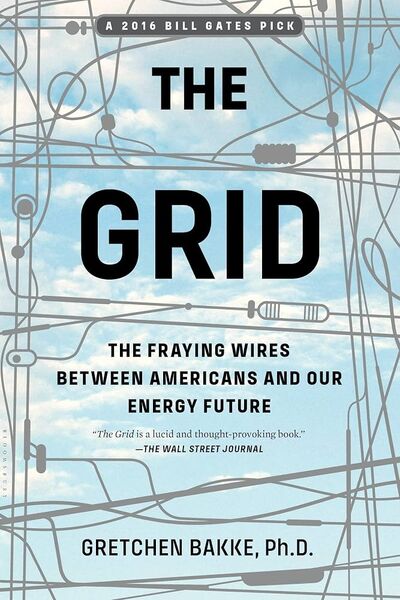
The fraying wires between America and its energy future, a book about the electrical grid. The foundation layer underneath the hardware and code.
Buy on Amazon → Read Review →Put together, it's a wicked combo if you want to understand energy, compute and our future, and where we're heading. If the AI layer is what you're after, I've collected the best books by the founders of AI in one place.
I'm still in the middle of this book, so there's no final verdict yet. But so far it has made me a lot more careful about calling things black boxes when I never actually tried to open one.
It surprised me that a book that looked so intimidating could work and help me learn this stuff. I'm thankful I got into it, because it got me excited about taking on even harder ideas and harder books. If it sounds interesting but you're a little intimidated, you should still check it out. I think it's well worth it. It's one of my favorite books of this year.
A full review is most likely coming next week.
📬 Subscribe to the Newsletter →
Last updated: November 7, 2026