The Black Swan
We can't predict the future — and the experts are even worse at it than you are.
Our Blindness to Randomness
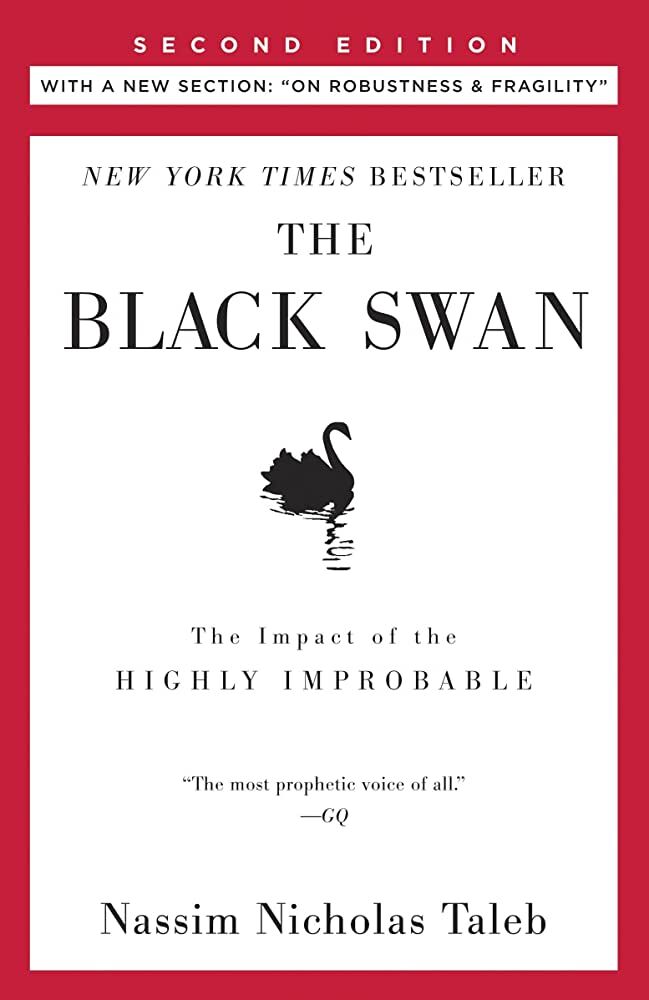
This book is about our blindness to randomness. Especially when it comes to large deviations and what Nassim calls a "black swan" event.
A "black swan" is a highly improbable event with three principal characteristics: it's unpredictable, it carries a massive impact, and after the fact, we concoct an explanation that makes it look less random and more predictable than it actually was.
Examples of black swans? 9/11. The amazing success of Google.
Why are we so bad at acknowledging these types of events? We concentrate on what we know and fail to take into consideration what we don't know. We love to oversimplify, narrate, and categorize a complex reality. This hurts us when estimating risks and seizing opportunities.
"I make a claim against many of our habits of thought, that our world is dominated by the extreme, the unknown and the very improbable."
The Triplet of Opacity
The human mind suffers from three ailments as it comes into contact with history, what Taleb calls the Triplet of Opacity:
Notes & Highlights
"In order to predict the future you need to know about technologies that will be discovered in the future. But that knowledge would almost automatically make us able to start developing those technologies right away. Ergo, we don't know what we will know."
Like Taleb, I refuse to run to catch trains. Missing a train is only painful if you run after it.
⭐️ Takeaway
We can't predict future events for shit. But more importantly, people that work with predictions are even worse predictors than your average Joe.
⚖️ Verdict
Great book! Taleb makes a powerful case that we're all walking around with blinders on, building models of reality that ignore the most important events — the ones we can't see coming. It's a book that changes how you think about risk, success, and how much you really know. If you liked this, his follow-up Antifragile takes the ideas further — from "we can't predict" to "here's how to benefit from chaos."
🦢 If You Liked The Black Swan
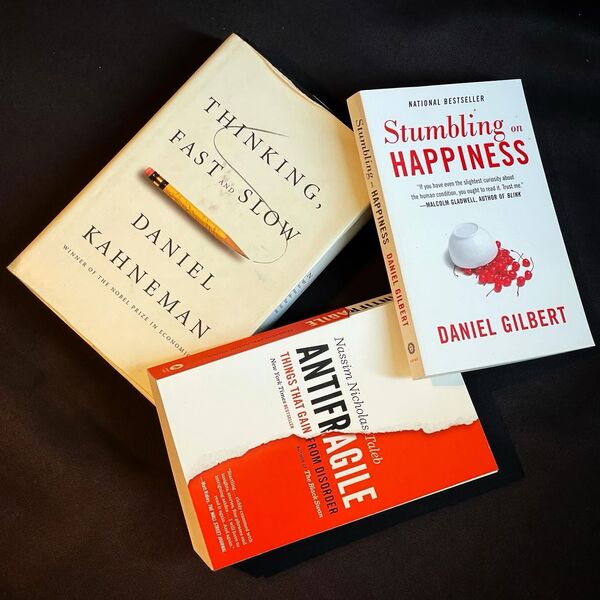
Three books that pair perfectly with The Black Swan — each one peels back another layer of how our brains trick us:
→ Antifragile — Nassim Nicholas Taleb · Taleb's follow-up: how to not just survive chaos, but benefit from it.
→ Thinking, Fast and Slow — Daniel Kahneman · The Nobel laureate's guide to the two systems running your brain.
→ Stumbling on Happiness — Daniel Gilbert · Why we're terrible at predicting what will make us happy.