Stoicism and the Art of Happiness
One Stoic principle did more for my baseline happiness than almost anything else I have read or tried.
The Principle That Raised My Baseline Happiness
Over the years of my reading and life in general, I have discovered many principles that have increased my baseline level of happiness. One of the most important, second only to the realization that I don't care what people think of me and my actions (still a work in progress), is the Stoic principle of focusing only on what is within our direct control.
The weather, death, traffic, other people, football scores, diseases, international politics. If we devoted ourselves entirely to caring only about what is within our direct control, and stayed indifferent to everything else, we would be free from so much suffering. So much anxiety and frustration would simply disappear.
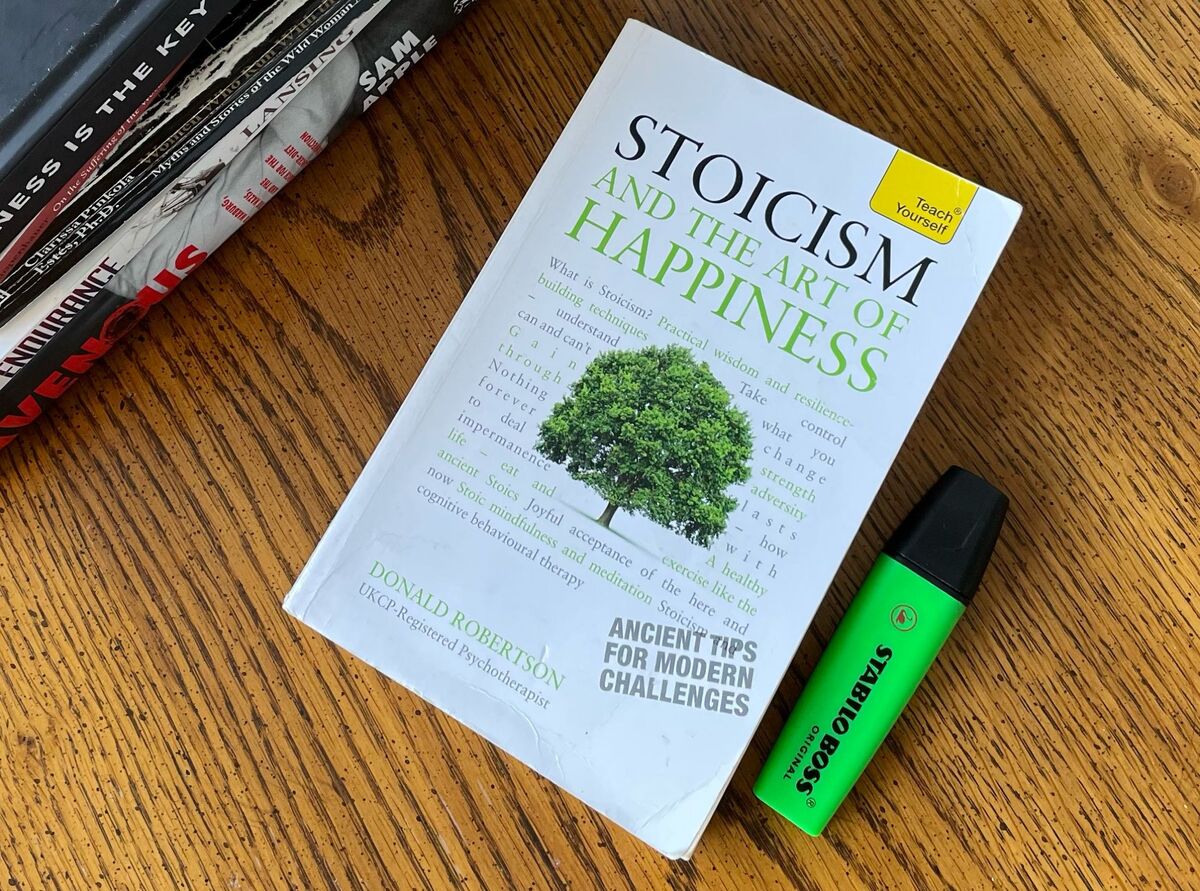
That is why I picked up Donald Robertson's Stoicism and the Art of Happiness. It is an excellent summary of the main ideas of Stoicism. It covers the key figures and how the philosophy evolved, and it offers practical exercises for applying Stoic principles in everyday life.
Notes From My Reading
"Men are disturbed not by things, but by the views which they take of them." - Epictetus
Two Daily Exercises for Novice Stoics
1. Endure what you irrationally fear, or find aversive, with courage and perseverance. The key word here is irrational. Some fears exist for a good reason. You shouldn't let a super dangerous spider crawl across your face. But what do you avoid that would be good for you? Riding elevators, or being on a crowded subway? Avoidance like that can keep you from living a full life.
A practical example from my own life: I had an aversion to public speaking, so I joined Toastmasters, a club where you practice speaking in front of other people. That is what now allows me to make videos for you. That is a good example of how you can get rid of an aversion by overcoming it head-on.
2. Renounce what you irrationally crave, through discretion and self-discipline.
📺 Video Review
The Archer and Outcome Independence
The goal of the Sage, the Stoic ideal, is not to benefit others, because that is beyond his control. Instead he does his best to benefit them. Like an archer releasing an arrow, the work is done once you have done everything you could, whether or not you hit the target.
💡 Key Takeaway
Stoicism is perhaps the most practical philosophy we have inherited from the ancient Greeks. Sort the world into what is up to you and what is not, then put your energy only into the first. So much anger, anxiety and frustration has been avoided in my life since I committed to this principle.
⚖️ Verdict
This is a great book, even an excellent one if you ignore its repetitive, textbook nature. It is very practical, and I especially like the examples, exercises and thought experiments. I guarantee you will learn something new about yourself.
If you are completely new to Stoicism, I still think William Irvine's A Guide to the Good Life is the best starting point. It was my own introduction to Stoicism, and it is the best entry if you come at it casually, without philosophical training. And you should study Stoicism. It is probably the philosophy that has had the greatest practical impact on my life. Without it, I would probably be a less satisfied person. That is more than I can say for most books.
🏛️ Go Deeper: The Best Books on Stoicism
Stoicism is the philosophy that has had the biggest practical impact on my life, and this book is only one door into it. I have ranked the best Stoicism books I have read, from beginner-friendly starting points like A Guide to the Good Life to the ancient source texts like Seneca's Letters from a Stoic, so you know what to read first and what to read next.
Read the Stoicism Reading Guide →