Mutants
A celebration of the most haunting, weird and wonderful shapes the human body can take.
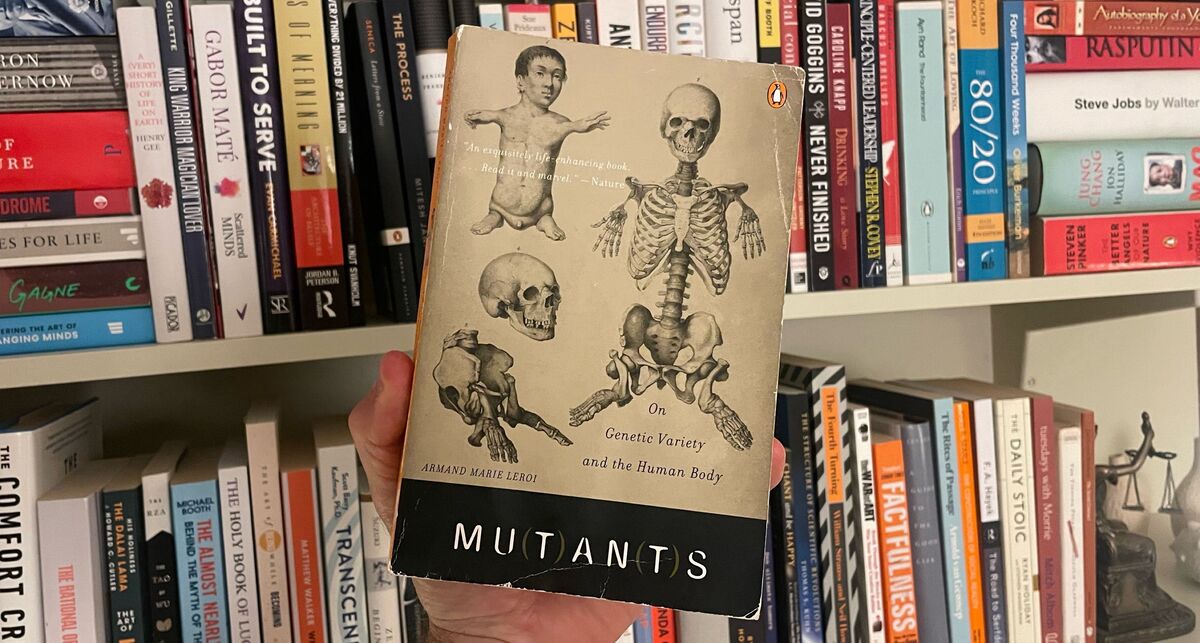
A Parasitic Head, a Cyclops and a Mermaid
"In 1982, a thirty-five-year-old Chinese man was reported with a parasitic head embedded in the right side of his own head. The extra head had a small brain, two weak eyes, two eyebrows, a nose, twelve teeth, a tongue and lots of hair. When the main head pursed its lips, stuck out its tongue or blinked its eyelids, so did the parasitic head; when the main head ate, the parasite drooled."
That's the kind of opening that makes you put down your coffee and just stare at the page. And it sets the tone perfectly for what this book is.
Spontaneous sex change, cyclops and mermaid syndrome and conjoined twins. The tall and the very short. Albinism and rapid aging. No stone is left unturned when Armand Marie Leroi takes us on a journey through the biology of the bizarre - and beautiful.
This book, as Leroi puts it, "is not only about the human body as we might wish it to be, but as it is - replete with variety and error."
We Are All Mutants
Mutations arise from errors made by the machinery that copies or repairs DNA. And the key insight is this: "We are all mutants, but some of us are more mutant than others."
What Leroi does brilliantly is take the most extreme cases of human variation and use them as windows into how the body is built. Every chapter uses a condition - dwarfism, gigantism, extra limbs, fused limbs - to explain the molecular machinery underneath.
There's a fascinating bit about the preformationists - people who believed the egg contained the entire embryo, complete with limbs, and that embryo had its own sperm or egg which in turn contained embryos ad infinitum. Turtles all the way down. It sounds absurd now but it was a serious position for centuries.
The Strange and the Beautiful
Some of the facts in here are wild. Boys who are castrated before puberty grow up to be unusually tall. In conjoined twins, the skew toward femininity is overwhelming - about 77 percent are girls. No one knows why. "Women of all cultures seem to prefer men who are on average five centimeters taller than themselves."
And then there are the stories that hit differently. Rita Hoefling was a white girl in apartheid South Africa who suddenly started turning black. At first she got subtle racist remarks. By the end of her transformation she was denied attending her own father's funeral. "I do not want to be embarrassed by your black body at Daddy's grave," said her mother. Racism is dumb.
📺 Video Review
And here's one that most people don't think about: clitoris equals penis. Same tissue, same developmental origin. The body just takes different paths depending on the hormonal signals it gets. Which is why spontaneous sex change isn't as far-fetched as it sounds.
📸 From the Pages
Click any image to enlarge.
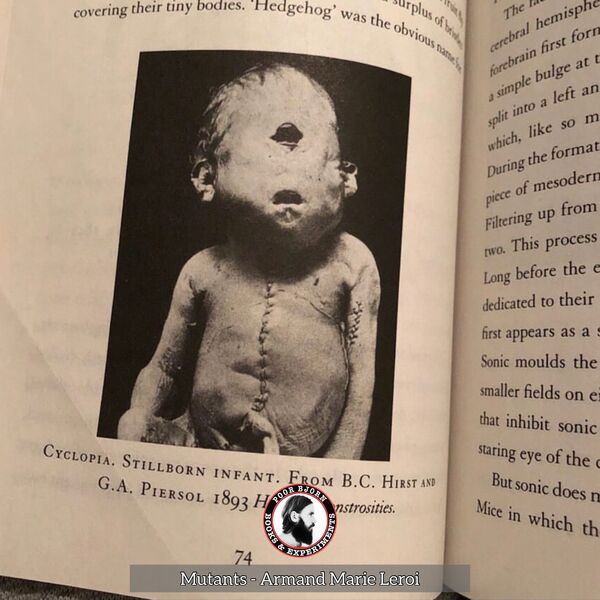 Cyclopia. Stillborn infant, 1893.
 Joseph Boruwlaski (1739-1837).
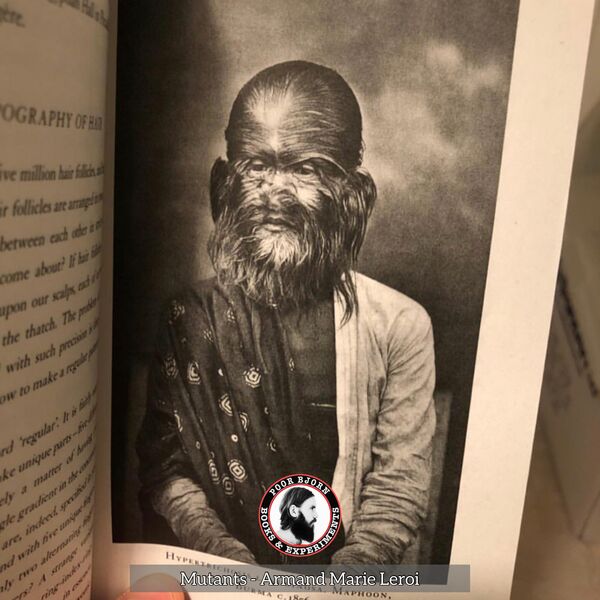 Hypertrichosis. Burma c.1856.
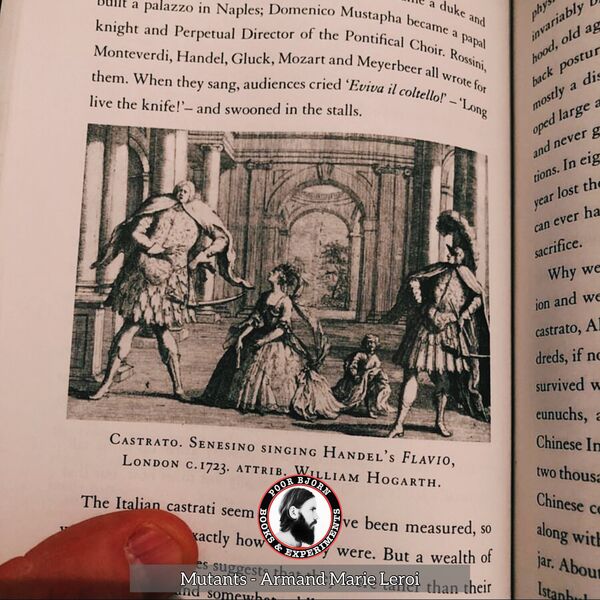 Castrato. Senesino, London c.1723.
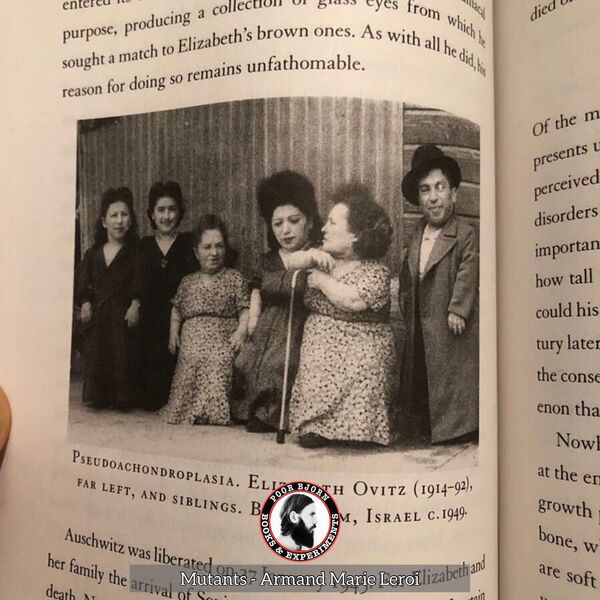 Elizabeth Ovitz and siblings, 1949.
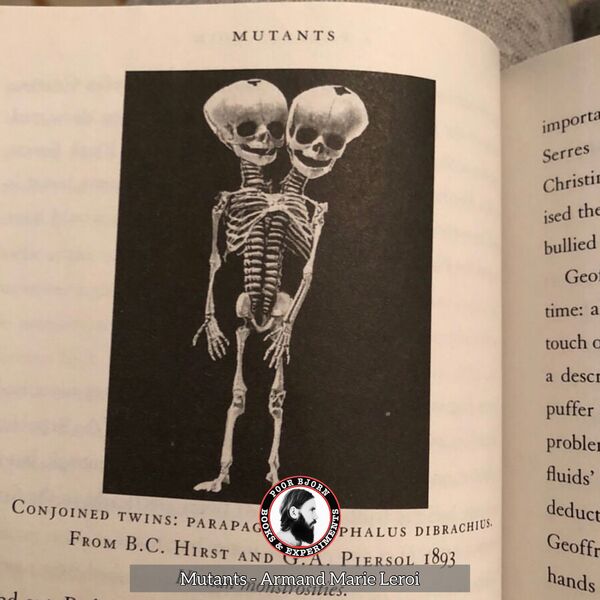 Conjoined twins. Hirst & Piersol, 1893.
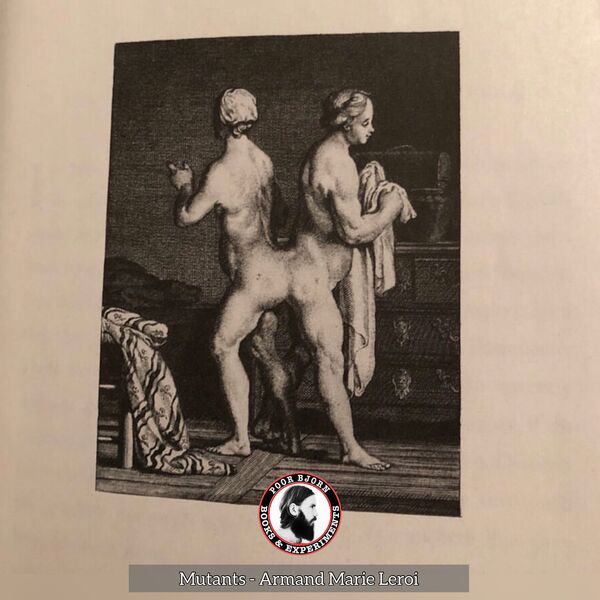 Conjoined twins. Historical engraving.
💡 Key Takeaway
I got a deeper understanding of why we are so strict with what type of medicine and food pregnant women can take. The fetus is so sensitive to external influences and chemicals. Alcoholic and diabetic mothers have a two-hundred-fold increased risk of giving birth to cyclopic children. Two hundred fold.
⚖️ Verdict
The human body is amazing. This book feels like a celebration of the most haunting, weird and wonderful shapes the human body can take. It leaves me in awe. Leroi writes with the precision of a scientist and the storytelling instinct of a novelist - every chapter takes you somewhere unexpected, and you come away understanding the body in a way you didn't before.