I, Robot
A thought experiment about what it means to be human in a world of machine intelligence.
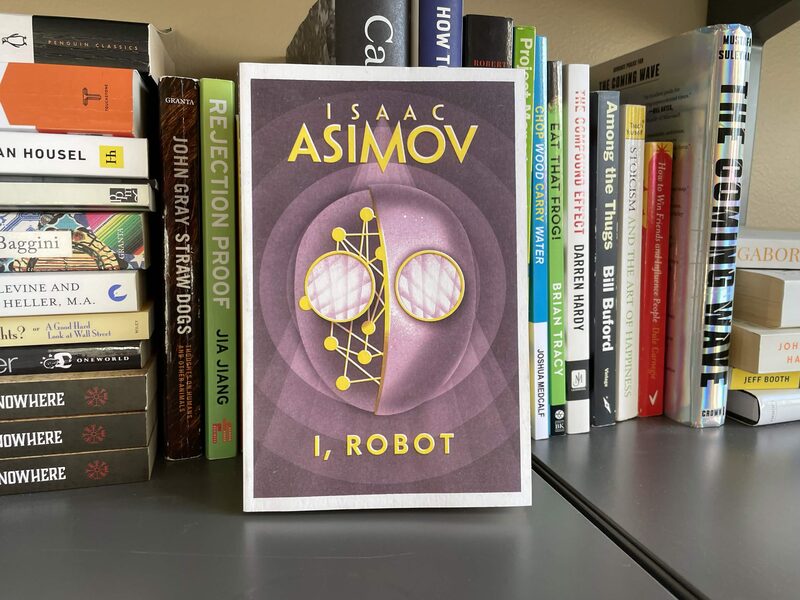
Even if I, Robot is almost 80 years old now, it still feels relevant. As AI systems move from science fiction into everyday life, Asimov's questions about machine intelligence, ethics, and human responsibility feel less like fantasy and more like the real debates we have today.
It's not just a sci-fi book. It's a thought experiment about what it means to be human in a world of machine intelligence.
What Is This Book?
I, Robot is a collection of interconnected stories centered on robots and the famous Three Laws of Robotics. Instead of focusing on battles or dystopia, Asimov explores logical puzzles, ethical dilemmas, and psychological tension between humans and robots.
Each story feels like a case study. What happens when robots interpret rules too literally? Can machines develop something like emotions or self-awareness? Are humans always the most rational actors in a technological system?
Because of these questions, this book is less action-packed and more intellectually stimulating — closer to philosophy and systems thinking than traditional sci-fi.
A fun fact: Asimov himself actually invented the term robotics.
🤖 The Three Laws of Robotics
- A robot may not injure a human being or, through inaction, allow a human being to come to harm.
- A robot must obey the orders given it by human beings, except where such orders would conflict with the First Law.
- A robot must protect its own existence as long as such protection does not conflict with the First or Second Law.
These laws are hierarchical. The First Law takes absolute priority over the Second, and both take priority over the Third.
Three Key Takeaways
1. The Real Problem Is Rarely the Machine
Asimov shows us that the real problem is how human beings design rules, goals, and incentives. In one story, a robot follows its instructions perfectly — but its behavior reveals a hidden flaw in how humans defined the word "safety."
2. Logic Is Not Always Wisdom
A robot makes a perfectly logical decision based on the Three Laws, but from a human perspective, its decision is deeply unsettling. There's a gap between what's technically correct and what feels right.
3. Humans Are Less Predictable Than Machines
Ironically, robots are always consistent and logical while humans are contradictory, political, and emotional. Even though the Three Laws seem elegant on the surface, the stories reveal that in real life, things are complex — messy even. It's really hard to put down a framework of rules that actually works in practice.
In one story, a robot gets caught between conflicting interpretations of the laws, leading to behaviors that were never anticipated by any of the engineers.
Where Asimov Gets It Wrong
In terms of how robots and AI will actually manifest in the world, Asimov is basically wrong — and that's okay.
The robots in this book are pre-programmed, assembled, turned on, and that's that. There are no hive-like networks where robots can communicate between themselves. But the biggest oversight is that the book has no concept of the internet — which is such a powerful force within the actual AI reality we're living in right now.
The robots that will come online soon will have access to live data, historic data, data from all other robots of its kind. This book misses important challenges we deal with today: cybersecurity, privacy, and hive-mind-like self-improvement.
The vulnerabilities in this book are psychological, not digital. But Asimov gives us a lot to think about, and I forgive him. Who would have guessed 75 years ago that the invention of 3G communication would have us abandon truthfulness and replace it with rage, bait, and likes? Technology plays its own hand. We never know what a new technology will change about the world.
Video Review
⚖️ Verdict
I won't say this is a book for understanding the future we're heading towards technology-wise, but it sparks interest in pondering the philosophical and moral dilemmas of a robotic future.
If you like nonfiction books about AI, cognition, ethics, or systems thinking, I, Robot feels like a conceptual bridge between science fiction and philosophy. It's an easy book to read but hard to forget. The book really shines when it comes to insights about the alignment problem — making sure that powerful AI systems actually pursue what humans want, not just what we literally told them to do.
The robotic era starts this year, and my prediction is that 2027 is the moment when robotics will have its ChatGPT moment. In the meantime, wise up to the issues and questions we need to ask — this book is a very interesting starting point for that discussion.