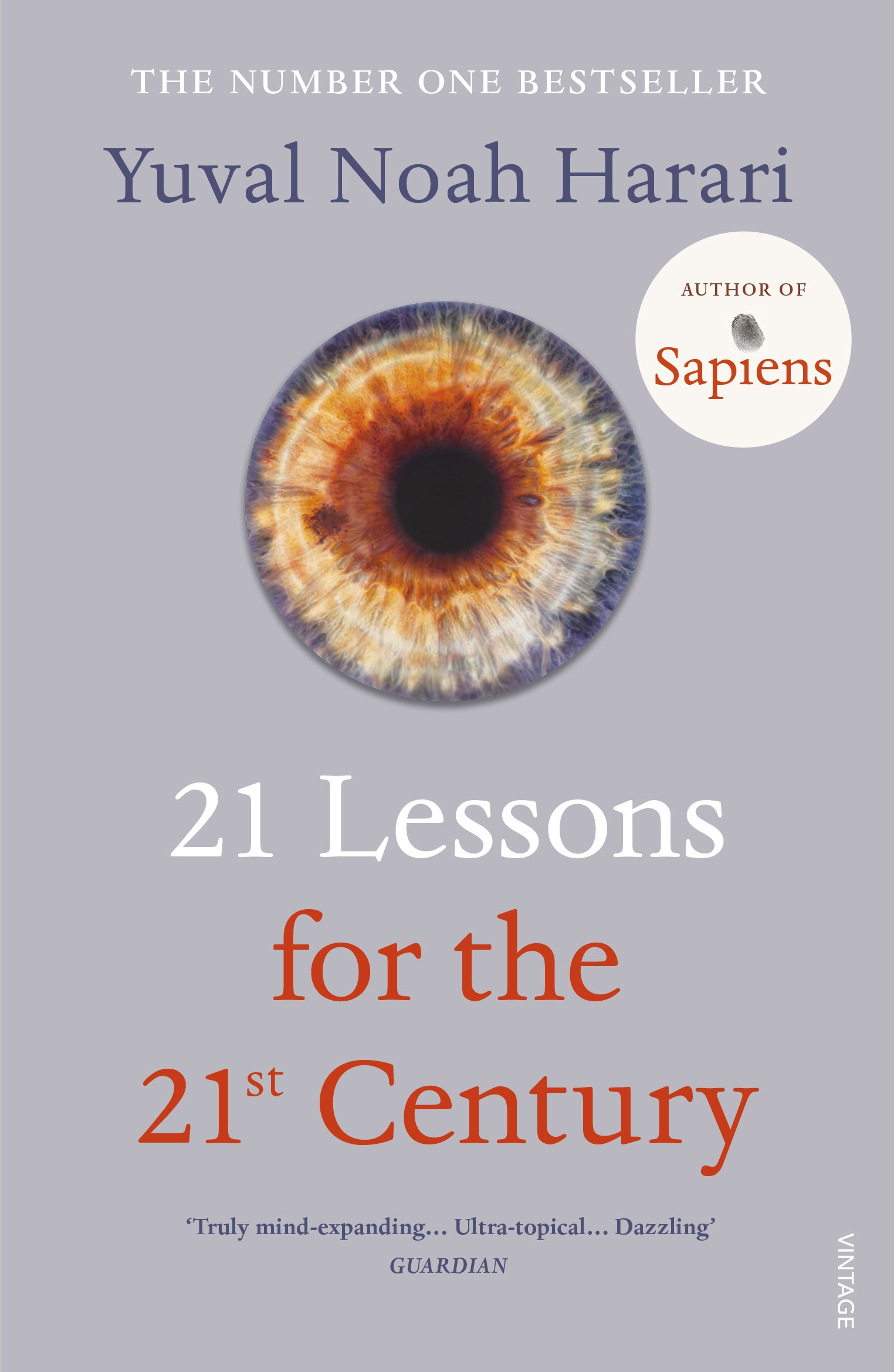
21 Lessons for the 21st Century
A whole bookshelf of topics crammed into one small volume.
Past, Present, Future
While his other books, Sapiens and Homo Deus, focused on the past and the far future — this book focuses on the present and mankind's immediate challenges.
Topics range from how to deal with disruptive technologies, the resurrection of nationalism, and the relevancy of religions. Harari wants to shine a light on the fact that we are lacking new idea systems capable of helping us navigate these new and trying times. Liberalism and the other old ideologies just won't make the cut anymore.
Notes & Highlights
The opportunity cost of fighting terrorism is that the money could have been used to fight other threats — like global warming.
Disruptive technologies will likely create a new "worthless class" of billions. Marxism might make a comeback when jobs are being threatened, one might think? But Marxism presumes that the worker's labour is of value. That probably won't be the case with advancements in automation.
Protect humans, not jobs. Finding meaningful pursuit for humans is the most important problem to solve in a future without jobs.
You don't need religious text to be moral. Apes learned to take care of the poor and weak well before the Bible told them so.
"If you want reliable information, pay good money for it."
⭐️ Takeaway
Harari doesn't have a solution for all the issues. He offers the same advice that wise people and sages always have: sit down on a cushion and observe your sensations. Know thyself, and get to know suffering deeply enough so that you can act in a way that reduces it — both in your life and in the life of others.
⚖️ Verdict
A whole bookshelf worth of topics crammed into one small volume, which becomes a problem when each chapter deserves its own book. But it's relevant, nuanced, and sometimes frightening. Harari has a rare ability to take enormously complex topics and make them accessible without dumbing them down. One of my favorite reads of 2018.