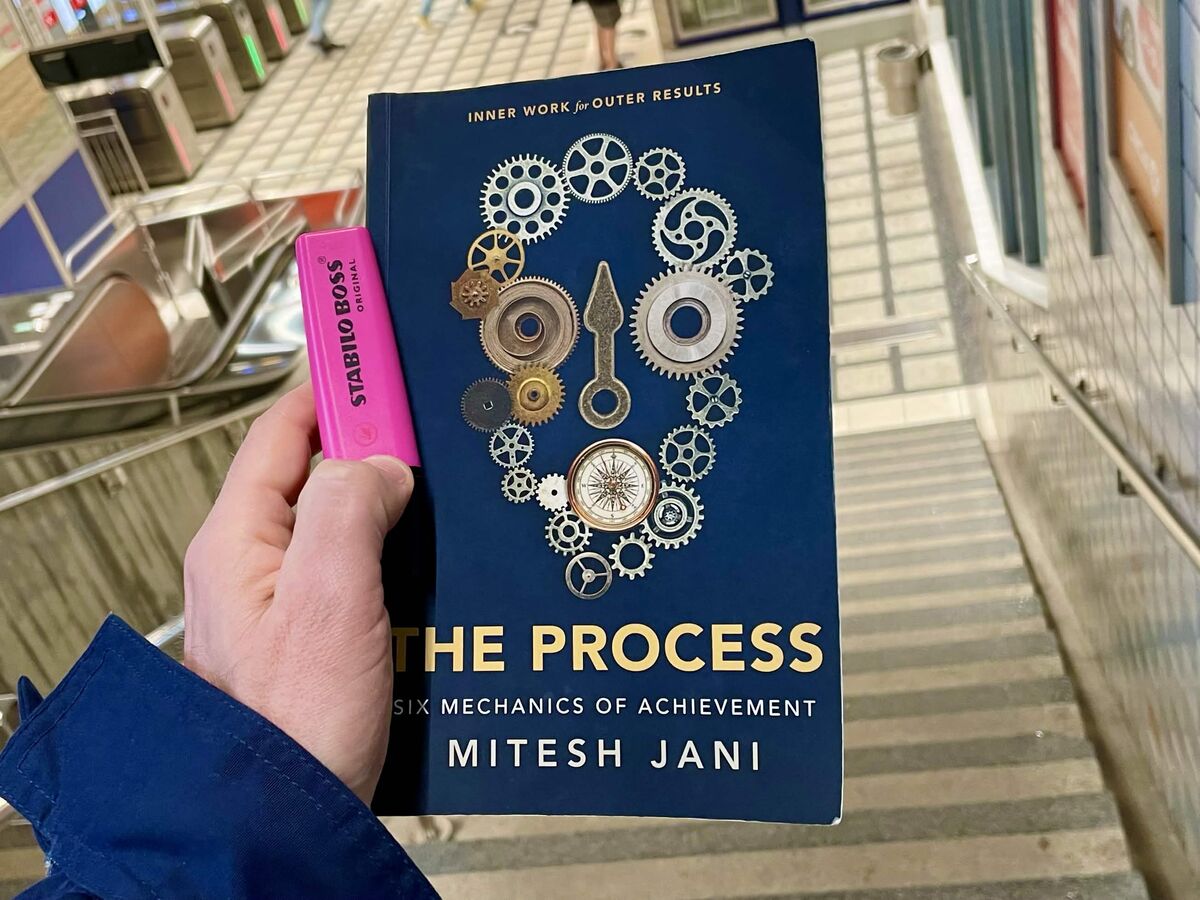
The Process: Six Mechanics of Achievement
Inner work for outer results — stop planning, start doing.
What's It About?
The Process is a practical, no-fluff guide to the six core mechanics that turn inner work into real-world achievement. Mitesh Jani breaks down why so many people stay busy yet make zero progress, why planning can become a sophisticated form of procrastination, and how to build genuine momentum instead of waiting for the "perfect" plan or timing.
It focuses on high-leverage action, measuring real results (not effort or feelings), rewiring your relationship with progress, and developing the agency to start before you're ready. This isn't motivational fluff — it's a clear operating system for turning intention into tangible outcomes.
🎯 Why It's on BookLab
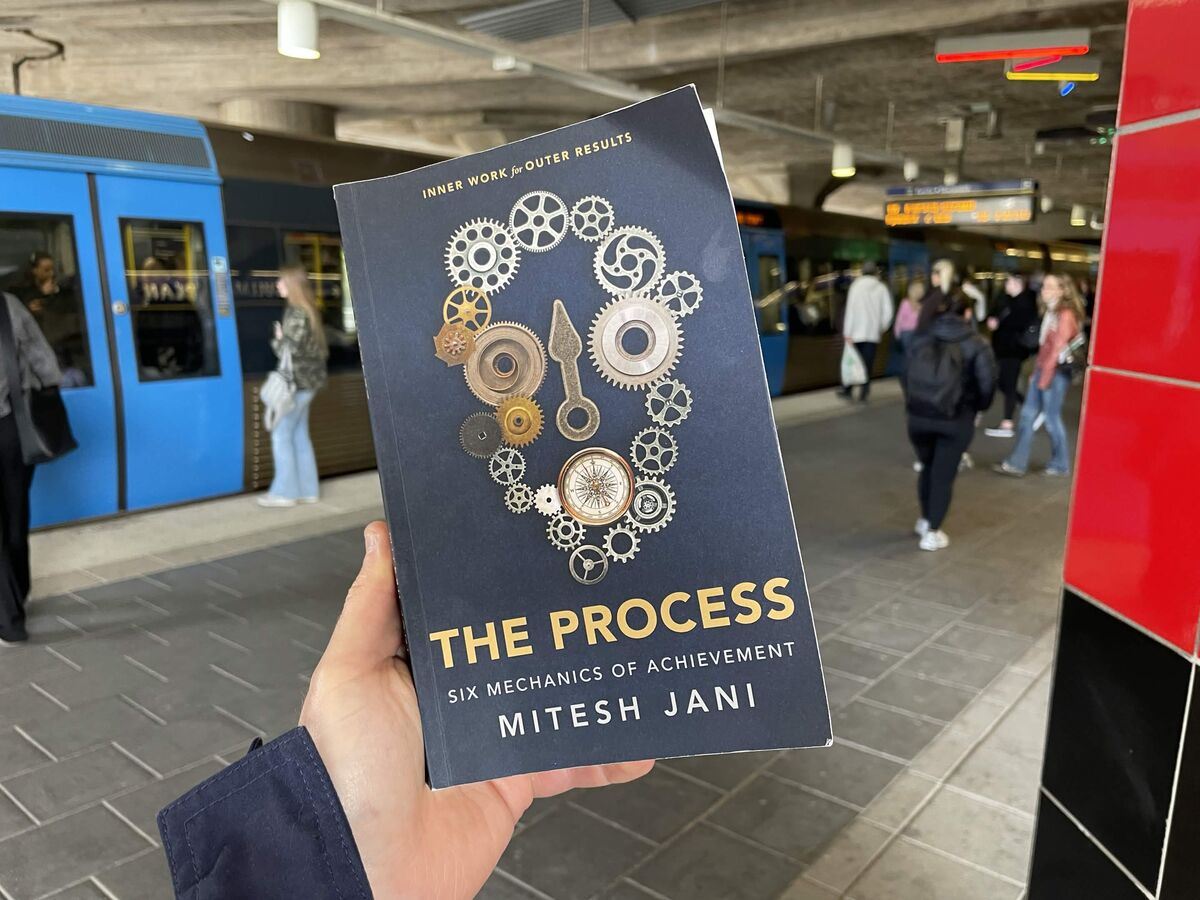
This book fixed my issues with procrastination and overthinking almost immediately. It's been my commute companion and one of the most practical reads I've picked up recently.
I love how it directly attacks the traps that keep high-agency people stuck: the dopamine hit from planning, the illusion of progress from low-leverage "busy work," and the endless search for the perfect conditions before starting.
It pairs beautifully with books like Turning Pro by Steven Pressfield. If you struggle with starting projects, staying consistent, or feeling like you're always "preparing" instead of doing, this one delivers.
📖 Key Topics
- Low-leverage actions — busy ≠ progress
- The planning trap — when plans replace action
- Measure results, not effort — same problems as last year?
- Momentum — it's harder to start than to continue
- Agency — stop waiting for perfect timing
- Intention → action — rare alignment, rare results
- Intuition over analysis — overthinking keeps you stuck
- Rewiring for results — feeling productive vs. being productive
📝 Highlights from My Reading
Here are the ideas that won't leave my head — pulled straight from pages I highlighted.
The core trap of low-leverage actions
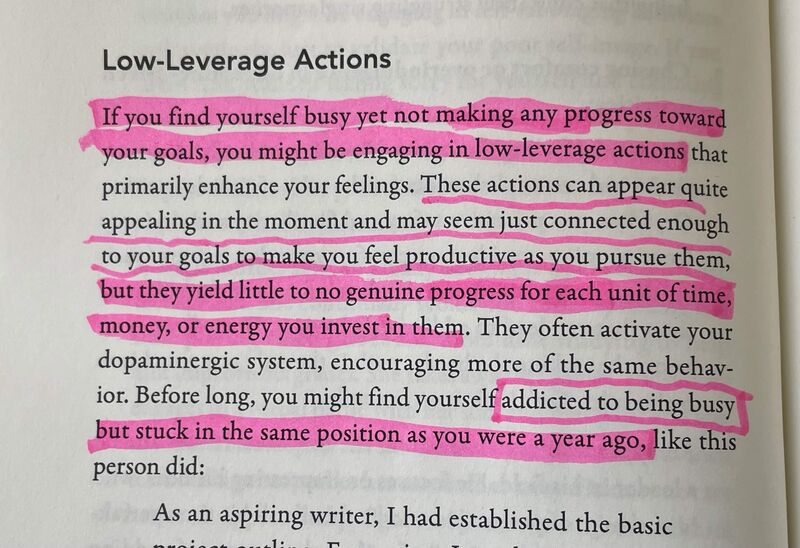
"If you find yourself busy yet not making any progress toward your goals, you might be engaging in low-leverage actions that primarily enhance your feelings… They often activate your dopaminergic system, encouraging more of the same behavior. Before long, you might find yourself addicted to being busy but stuck in the same position as you were a year ago."
The solution: Measure results, not effort.
Illusion of progress & the pitfall of inaction
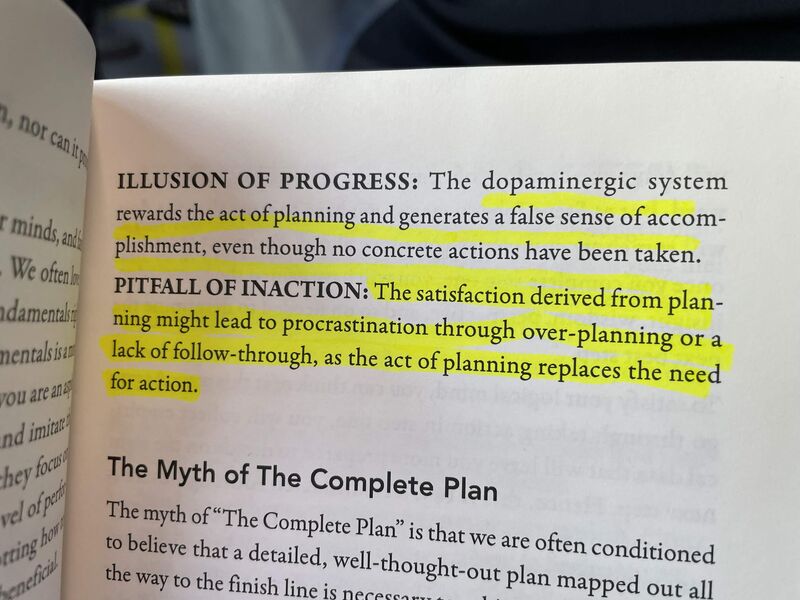
"The dopaminergic system rewards the act of planning and generates a false sense of accomplishment, even though no concrete actions have been taken."
"The satisfaction derived from planning might lead to procrastination through over-planning or a lack of follow-through, as the act of planning replaces the need for action."
The Myth of The Complete Plan — analytical decision-makers often convince themselves they are still "searching for a true calling" or that the timing isn't quite right. They would rather remain stuck than risk choosing something "wrong."
The waiting trap
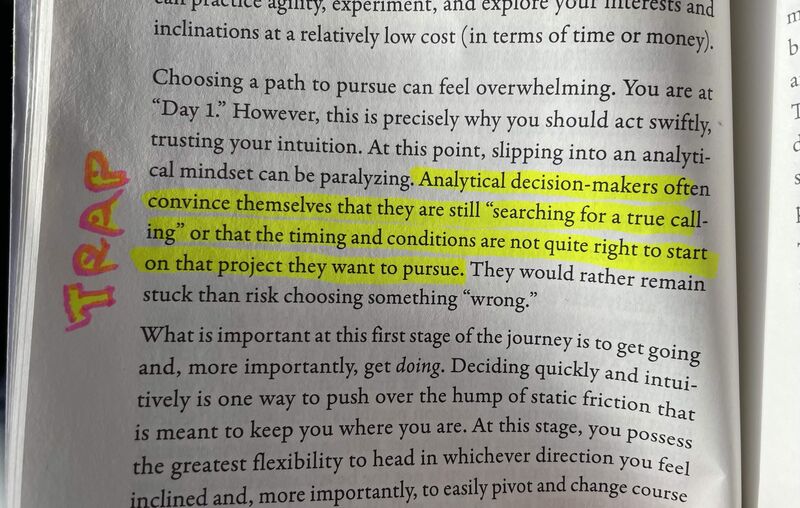
This page hit hard. That voice in your head saying "I just need to figure out the right thing first" — it's the trap. The important thing is to get going and, more importantly, get doing.
A simple progress check
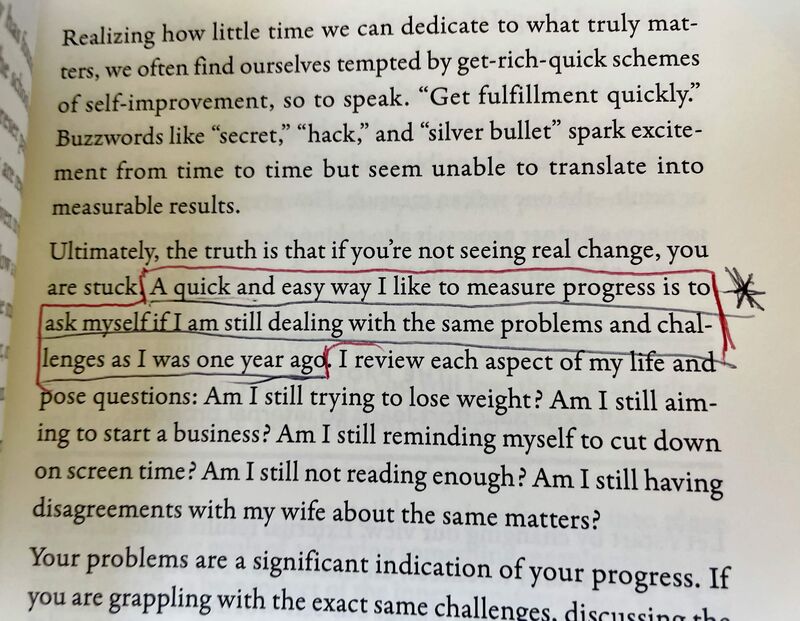
"A quick and easy way I like to measure progress is to ask myself if I am still dealing with the same problems and challenges as I was one year ago."
Simple, brutal, and effective.
Agency is key
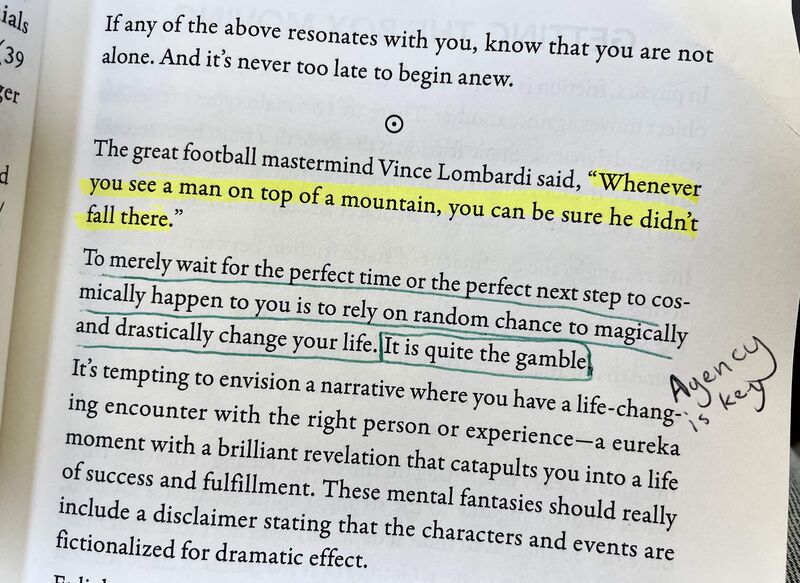
"Whenever you see a man on top of a mountain, you can be sure he didn't fall there."
To merely wait for the perfect time is to rely on random chance to magically change your life. It is quite the gamble.
"When you rarely act in line with your intention, you rarely see intended results."
"Action is the physical extension of intention. Only through action can an idea in the mental space be transmuted into the physical realm."
On momentum: "It's harder to start than to continue. Start before you're ready."
Learn more about the author at selfworth.ca.