10 Best Books for Overthinkers — Stop the Mental Noise
I'm an overthinker. Always have been. I can spend an hour planning how to spend an hour. I've replayed conversations in my head for days, second-guessed decisions that didn't matter, and paralyzed myself by trying to think my way to a perfect outcome that doesn't exist.
If that sounds familiar, you're not alone. And if you've been looking for "the best books on overthinking," you've probably noticed that most recommendations fall into two categories: clinical self-help books with titles like "Stop Overthinking in 7 Steps," or vague advice about journaling and breathing exercises. There's nothing wrong with those — but they never worked for me.
What actually helped me was going deeper. Philosophy, psychology, books about meaning and focus and the nature of the mind itself. Books that didn't just tell me to stop thinking so much, but helped me understand why I was thinking so much — and gave me something better to do with that mental energy.
These are the 10 books that genuinely helped me get out of my own head. Not by numbing the mind, but by rewiring it.
The 10 Books
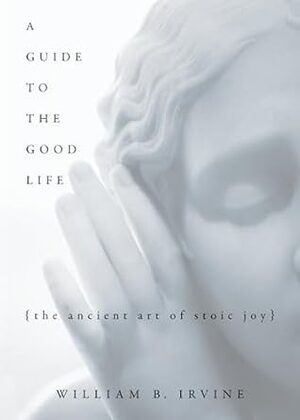
1. A Guide to the Good Life — William B. Irvine
This is the book that changed everything for me. Not just about overthinking — about how I approach life in general. Irvine translates ancient Stoic philosophy into something you can actually use today, and the core idea is devastatingly simple: most of what you're overthinking about is stuff you can't control. So stop.
The Stoics had a framework for this — the dichotomy of control. You divide everything in your life into things you can influence and things you can't, and then you pour all your mental energy into the first category and let go of the second. It sounds obvious. It's not. It takes practice. But once it clicks, the constant noise in your head gets a lot quieter.
You'll also learn about negative visualization — deliberately imagining the loss of what you value, not to make yourself anxious, but to short-circuit the anxiety you already have. If you've already imagined the worst, you stop fearing it. It's counterintuitive and it works.
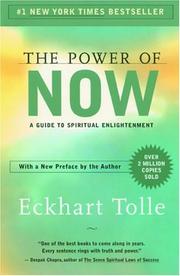
2. The Power of Now — Eckhart Tolle
You cannot overthink in the present moment. That's the core insight of this book, and it's true. Overthinking is always about the past (replaying, ruminating) or the future (worrying, planning excessively). The present moment is the one place your mind can actually rest.
Tolle's writing style is unusual — it's calm to the point of being meditative. Some people find it life-changing, others find it frustrating. I found it life-changing. He doesn't give you techniques so much as a shift in perspective. He asks: who is the "you" that's doing all this thinking? And what happens when you step back and just observe the thoughts instead of following them?
I'll be honest — the first time I read this book, about half of it went over my head. But the parts that landed, landed hard. And I've come back to it multiple times since.
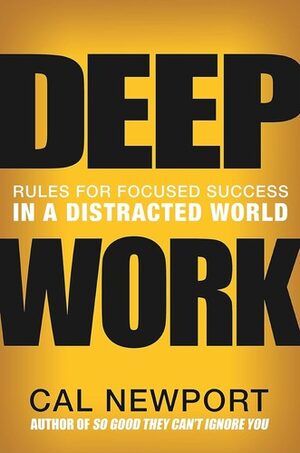
3. Deep Work — Cal Newport
Here's a different take on overthinking: most of us overthink because we've lost the ability to focus. Our attention is scattered across notifications, tabs, social media, and half-finished tasks. When your mind has no single thing to lock onto, it bounces — and that bouncing is the overthinking.
Newport's argument is that the ability to focus deeply on one thing is both increasingly rare and increasingly valuable. He calls it "deep work" — professional activities performed in a state of distraction-free concentration that push your cognitive capabilities to their limit. The opposite is "shallow work" — logistical tasks performed while distracted.
The practical framework he provides — time blocking, quitting social media during work hours, batching shallow tasks — gave me a structure that my scattered mind desperately needed. Overthinking thrives in a vacuum. When you fill that vacuum with focused, meaningful work, there's simply no room for the mental noise.

4. Man's Search for Meaning — Viktor E. Frankl
If you're stuck in a spiral of overthinking about whether your life has meaning, whether you're on the right path, whether your choices matter — read this book. It won't gently reassure you. It will reframe the entire question.
Frankl was a psychiatrist who survived the Nazi concentration camps. In the most extreme suffering imaginable, he observed something that shouldn't have been possible: some prisoners found meaning even in the horror. His conclusion — that meaning is not something you find, but something you create through your response to whatever life throws at you — is the most powerful antidote to existential overthinking I've ever encountered.
The book is short. You can read it in an afternoon. But it stays with you for years. When I catch myself spiraling about "what's the point of all this," Frankl's voice is the one that pulls me out.
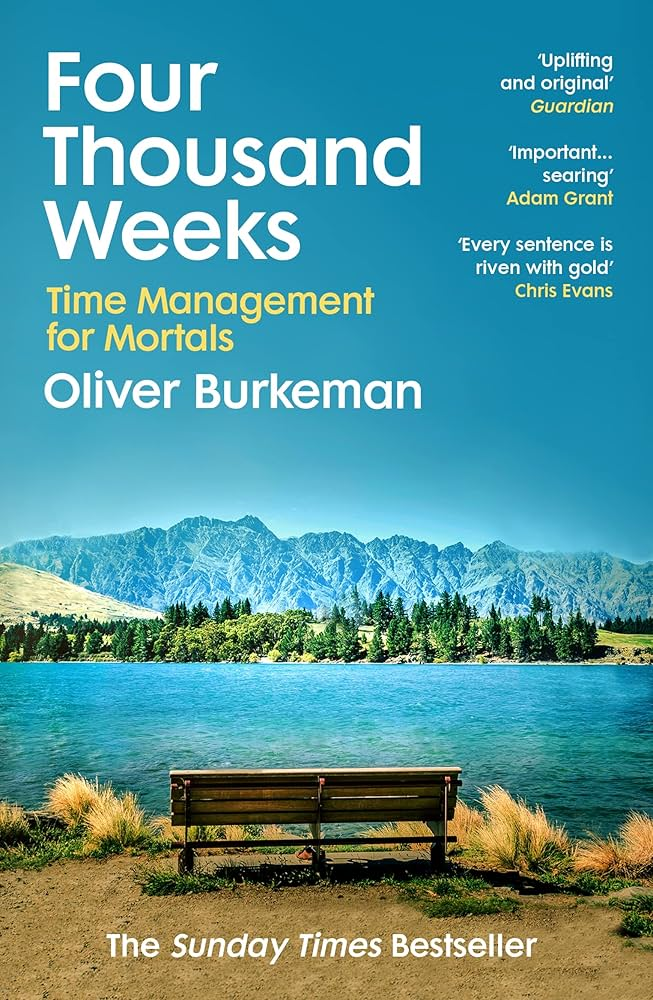
5. Four Thousand Weeks — Oliver Burkeman
The average human lifespan is roughly four thousand weeks. That's the starting point of this book, and it hits like a cold shower. Burkeman's argument isn't another productivity hack or time management system — it's the opposite. He says the problem with overthinking your time is that you're trying to feel in control of something you were never meant to control.
Most overthinkers are secretly perfectionists about time. We want to use it optimally, plan it perfectly, and squeeze maximum value from every hour. Burkeman shows how that mindset is itself the trap. The more you try to "manage" your four thousand weeks, the more anxious you become about wasting them — and the more you overthink every decision about how to spend them.
The book draws on philosophy, psychology, and Burkeman's own recovery from productivity obsession. His conclusion is oddly comforting: you will never get everything done. You will never feel "on top of it all." And accepting that — truly accepting it — is the most liberating thing an overthinker can do. It's packed with insights that feel like dozens of essays tied together in a thoughtful way.
6. Essentialism — Greg McKeown
Overthinkers often overthink because they're trying to do everything. Every option feels important. Every opportunity could be "the one." So you keep all your plates spinning and wonder why you're exhausted and going nowhere.
McKeown's thesis is brutal in its simplicity: almost everything is noise. Only a few things really matter. Your job is to figure out what those things are and ruthlessly eliminate the rest. Not "deprioritize." Eliminate.
This book helped me more with decision-making than any productivity system ever has. Because the problem was never that I couldn't decide. The problem was that I was treating every decision as equally important. Once you accept that most decisions are trivial and only a handful are essential, the overthinking around them collapses.
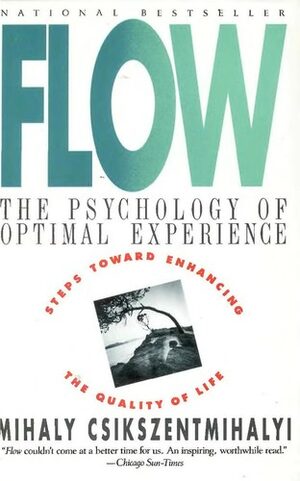
7. Flow — Mihaly Csikszentmihalyi
Flow is the state where overthinking becomes impossible. You're so absorbed in what you're doing that there's no bandwidth left for self-doubt, worry, or rumination. Time disappears. Your inner critic shuts up. You're just in it.
Csikszentmihalyi spent decades studying this state, and this book explains what triggers it: a clear goal, immediate feedback, and a challenge level that matches your skill level. Too easy and you're bored (which leads to mind-wandering). Too hard and you're anxious (which leads to overthinking). But in that sweet spot — flow.
This is a five out of five book for me. It didn't just help me understand overthinking — it showed me what the opposite looks like. And once you know what flow feels like and how to create the conditions for it, you start designing your life around it. The more time you spend in flow, the less time you spend stuck in your head.
8. Atomic Habits — James Clear
This might seem like an odd pick for an overthinking list, but hear me out. Overthinking is a habit. It's a pattern your brain has learned to default to, usually because at some point it felt productive or protective. Breaking it requires the same principles as breaking any other habit.
Clear's framework — make the cue invisible, make the craving unattractive, make the response difficult, make the reward unsatisfying — can be applied directly to overthinking patterns. When you catch yourself spiraling, what's the cue? What's the reward your brain thinks it's getting? Once you see the loop, you can redesign it.
But more broadly, this book helped me replace overthinking with doing. When you build systems — small, daily habits that move you forward automatically — you don't need to agonize over decisions every day. The system decides for you. That's freedom.
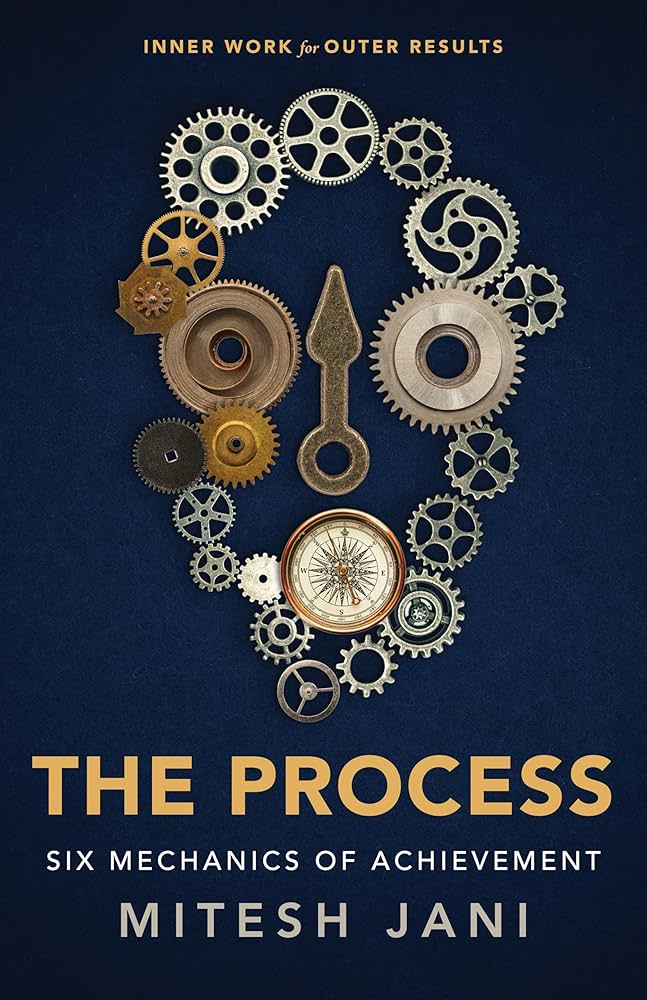
9. The Process: Six Mechanics of Achievement — Mitesh Jani
This is a newer book and one I'm reading right now — it landed on this list because it addresses something most overthinking books ignore: the gap between knowing what to do and actually doing it. Jani's core idea resonated with me immediately: you can't trust the process if you can't track the process.
Overthinkers are great planners. We love planning. We can plan for months. The problem is that the planning becomes the activity — it substitutes for execution. Jani breaks achievement down into six mechanics and shows how overplanning and overthinking are actually symptoms of not understanding which phase of the process you're in. Sometimes you need to plan. Sometimes you need to stop planning and start moving. Knowing the difference is the skill.
The book covers overcoming inertia, building momentum, recognizing markers of real progress, and — crucially — knowing when to adapt versus when to push through. It's practical in a way that most mindset books aren't.
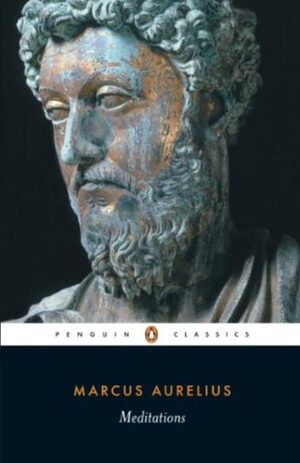
10. Meditations — Marcus Aurelius
The original anti-overthinking manual, written by the most powerful man in the ancient world — and never meant to be read by anyone but himself. That's what makes it so powerful. These are the private notes of a Roman emperor reminding himself, over and over, to stop worrying about things he can't control.
Marcus Aurelius lived during wars, plagues, and political chaos. And his response to all of it was to sit down and write himself reminders: focus on what's in front of you. Don't waste energy on other people's opinions. Accept that suffering is part of life. Do your work. Be kind. That's it.
Some passages hit like a freight train. Others feel repetitive. That's because Marcus was repeating these ideas to himself — drilling them in, the way you'd repeat an affirmation. He wasn't writing a book. He was fighting his own overthinking in real time. And reading it feels like joining him in that fight.
💡 The Common Thread
If you look at this list, you'll notice that most of these books aren't "overthinking books" in the traditional sense. They're not clinical guides with worksheets and exercises. They're books about focus, meaning, philosophy, and action.
That's deliberate. I don't think overthinking is a standalone problem. It's a symptom — of a mind that lacks direction, a life that lacks structure, or a person who hasn't yet found something meaningful enough to fully absorb their attention. Fix those underlying things, and the overthinking quiets down on its own.
Start with A Guide to the Good Life if you want philosophy. Start with Deep Work if you want structure. Start with Man's Search for Meaning if you want perspective. And if you want all three, read them in that order.
Your mind is a powerful thing. These books helped me learn to use it instead of being used by it.