5 Nonfiction Books About Death That Changed How I Think About Living

by Bjorn ยท โฑ 6 min read
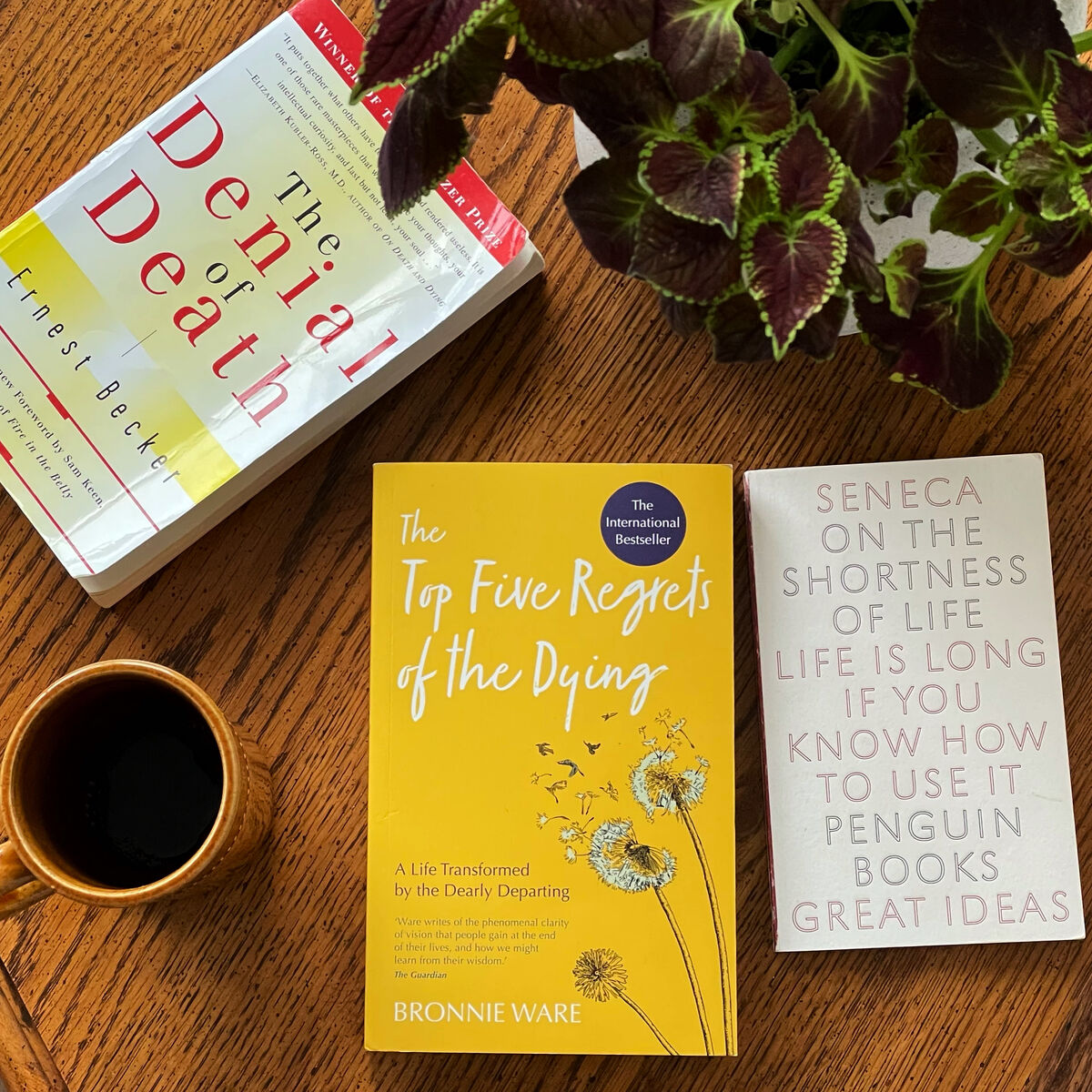
Bjorn's book collection

Here's a paradox that took me years to understand: the books that changed how I live the most were books about death. Not morbid, depressing books โ€” but profound explorations of mortality that somehow made everything feel more vivid, more urgent, more worth showing up for.

We spend most of our lives running from the thought of death. We distract ourselves, we build monuments to our egos, we pretend we have infinite time. But the writers on this list looked death square in the face โ€” some from a philosopher's desk, some from a hospital bed โ€” and came back with insights that fundamentally changed how I think about being alive.

Why Read About Death?

The Stoics called it memento mori โ€” remember that you will die. Not as a depressing exercise, but as a clarifying one. When you truly internalize that your time is limited, the trivial falls away. You stop procrastinating on what matters. You tell people you love them. You stop caring about things that don't deserve your attention.

These 5 books each approach mortality from a different angle, and together they form the most powerful reading experience I can recommend.

The 5 Books

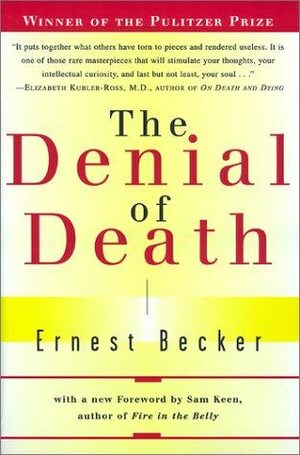
The Denial of Death by Ernest Becker

1. The Denial of Death โ€” Ernest Becker

Ernest Becker (1973)

This is the big one. Becker's Pulitzer Prize-winning masterpiece argues that the fear of death is the fundamental motivation behind nearly everything we do. Our "hero projects," our obsession with legacy, our cultures, our religions โ€” all elaborate defense mechanisms against the terror of our own annihilation.

"The idea of death, the fear of it, haunts the human animal like nothing else; it is a mainspring of human activity โ€” activity designed largely to avoid the fatality of death, to overcome it by denying in some way that it is the final destiny for man."

It's not an easy read. Becker draws heavily on Kierkegaard, Freud, and Otto Rank. But once you absorb his argument, you'll never look at human behavior the same way again. Every status game, every creative pursuit, every act of heroism or destruction โ€” suddenly it all makes sense through the lens of mortality denial. This is a 5/5 book for me and it sits permanently on my Great Books List.

Get on Amazon โ†’

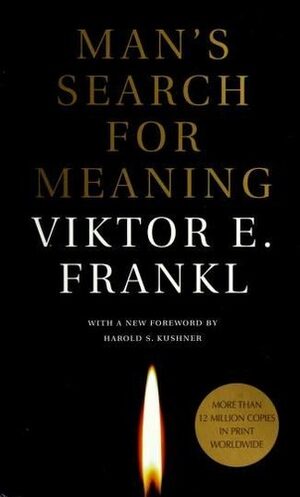
Man's Search for Meaning by Viktor E. Frankl

2. Man's Search for Meaning โ€” Viktor E. Frankl

Viktor E. Frankl (1946)

If I could only recommend one book for the rest of my life, it would be this one. Frankl, a psychiatrist and Holocaust survivor, describes life inside Auschwitz and the psychological strategies that separated those who survived from those who gave up. His conclusion: meaning is what keeps us alive โ€” even when everything has been stripped away.

"He who has a why to live for can bear almost any how."

What makes this book so powerful about death specifically is how Frankl shows that confronting the absolute worst โ€” starvation, torture, watching friends die in gas chambers โ€” doesn't destroy meaning. It reveals it. The proximity to death didn't make life meaningless; it made every small act of kindness, every sunset glimpsed through barbed wire, infinitely precious.

This was the first 5/5 book I ever read, and it remains unshakeable.

Get on Amazon โ†’

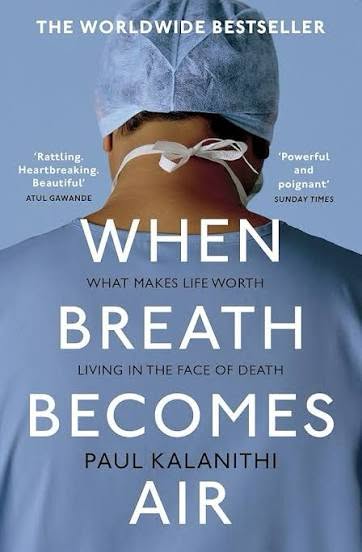
When Breath Becomes Air by Paul Kalanithi

3. When Breath Becomes Air โ€” Paul Kalanithi

Paul Kalanithi (2016)

Paul Kalanithi was a brilliant neurosurgeon at Stanford โ€” a man who spent his career operating on the boundary between life and death โ€” when he was diagnosed with stage IV lung cancer at age 36. This memoir, written in the months before he died, asks the question: when you know you're dying, what makes life worth living?

"You can't ever reach perfection, but you can believe in an asymptote toward which you are ceaselessly striving."

What wrecked me about this book is the shift in perspective. Kalanithi goes from doctor to patient, from the one delivering terminal diagnoses to receiving one. The writing is breathtaking โ€” literary, precise, and devastatingly honest. He doesn't find easy answers. He finds something harder and more beautiful: the courage to keep building a life worth living even when the foundation is crumbling.

I finished this book in one sitting and sat in silence for a long time afterward.

Get on Amazon โ†’

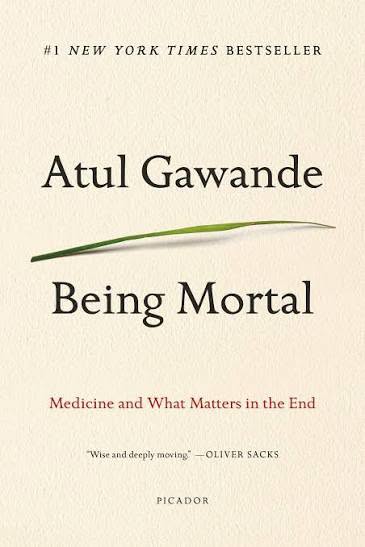
Being Mortal by Atul Gawande

4. Being Mortal โ€” Atul Gawande

Atul Gawande (2014)

If Becker gives you the philosophy of death and Frankl gives you the existential meaning, Gawande gives you the practical reality. As a surgeon, Gawande confronts what modern medicine gets catastrophically wrong about aging and dying: we treat death as a medical failure rather than a natural part of life.

"Our ultimate goal, after all, is not a good death but a good life to the very end."

This book changed how I think about growing old, about what I want my final years to look like, and about the conversations I need to have with the people I love before crisis hits. Gawande makes a compelling case that by trying to extend life at all costs, we often destroy the very things that make life worth living โ€” autonomy, dignity, connection.

Read this one even if you're young and healthy. Especially if you're young and healthy.

Get on Amazon โ†’

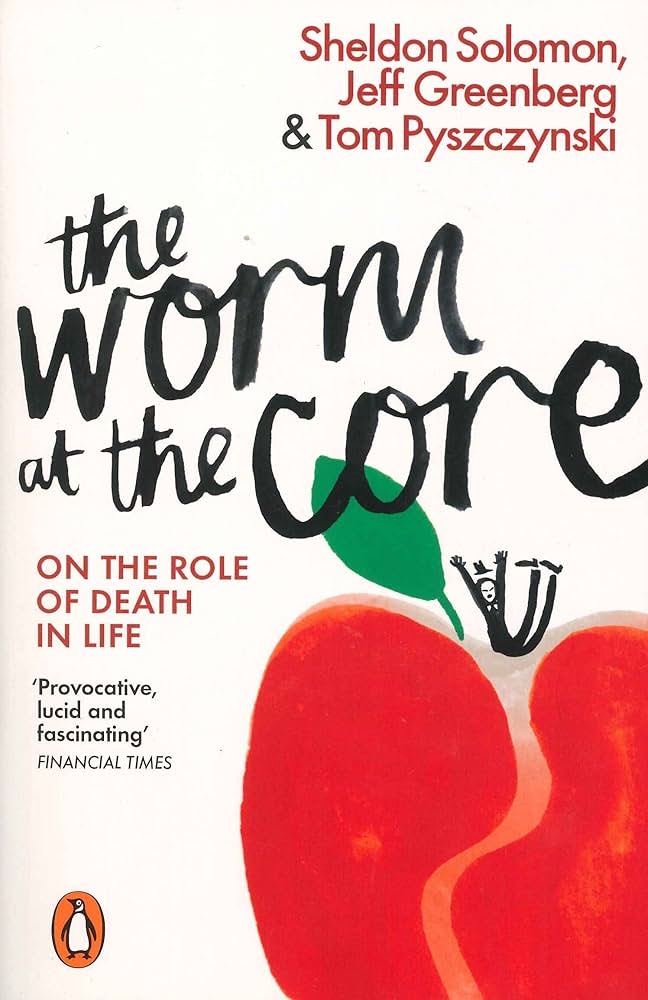
The Worm at the Core by Sheldon Solomon, Jeff Greenberg, and Tom Pyszczynski

5. The Worm at the Core โ€” Solomon, Greenberg & Pyszczynski

Sheldon Solomon, Jeff Greenberg & Tom Pyszczynski (2015)

If The Denial of Death is the philosophy, The Worm at the Core is the science. These three psychologists spent 25 years running experiments to test Becker's ideas โ€” and the results are staggering. They developed Terror Management Theory: the idea that awareness of death drives an enormous amount of human behavior, from nationalism and prejudice to self-esteem and consumer choices.

"The terror of death is the underlying motivation for almost all human activity."

The experiments are fascinating. Remind people of their mortality (even subliminally) and they become more nationalistic, more hostile to outsiders, more attached to their cultural worldviews, and more likely to punish rule-breakers. Death anxiety doesn't just lurk in the background of our lives โ€” it actively shapes our politics, our relationships, and our identities.

Read this as the scientific companion to Becker. Together they form one of the most compelling frameworks for understanding human behavior I've ever encountered.

Get on Amazon โ†’

๐Ÿ’ก The Takeaway

These five books form a complete arc. The Denial of Death shows you how deeply mortality shapes human civilization. Man's Search for Meaning proves that meaning survives even the most horrific proximity to death. When Breath Becomes Air captures the intimate, personal experience of facing your own end. Being Mortal challenges how we handle death in practice. And The Worm at the Core gives you the scientific evidence tying it all together.

Read them in this order if you can. By the end, you won't be more afraid of death โ€” you'll be more awake to life. And that's the whole point.