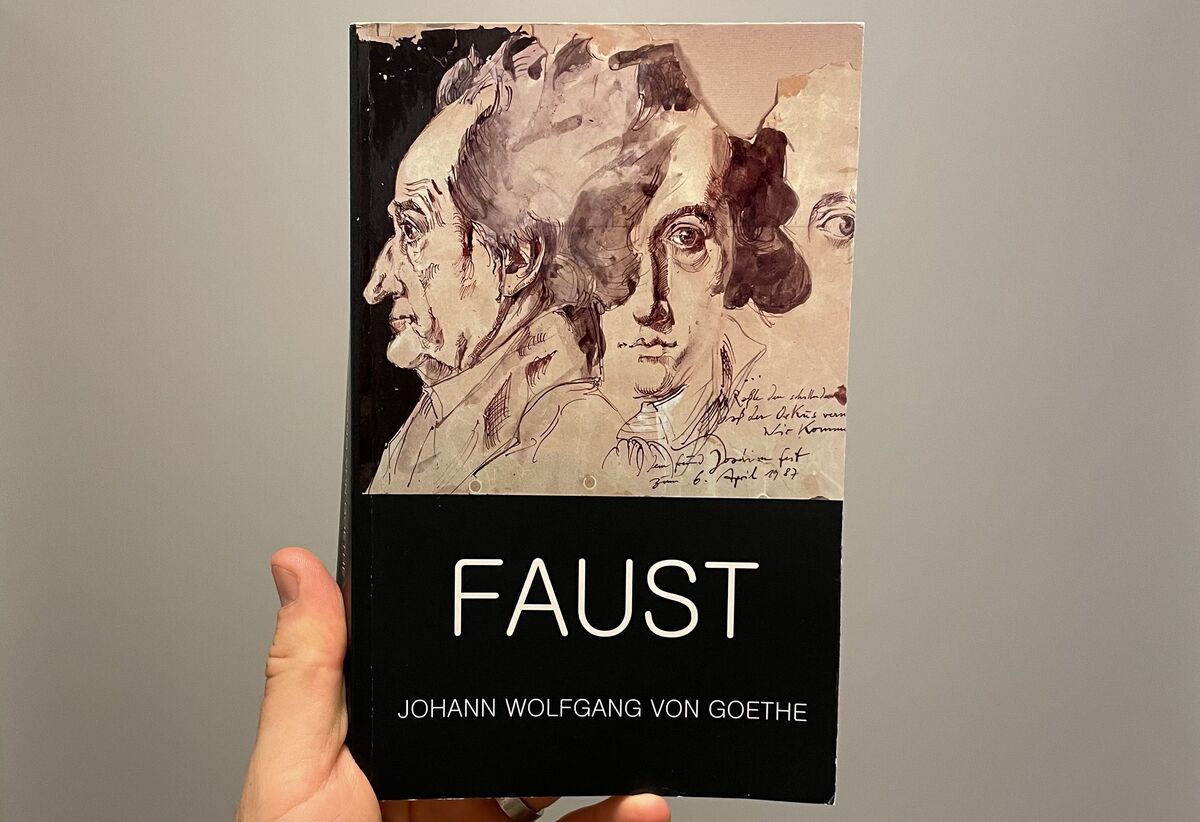
Faust
The original deal-with-the-devil story — and a blueprint for how to live, written over a lifetime.
Why Read This Old Thing?
The book is written by one of the most prominent western writers and thinkers, Johann Wolfgang von Goethe. A work that he spent almost all his life iterating on — and he wasn't done until he was in his 80s. It's a blueprint for how to live, one could say, but also the original "making a deal with the devil" story.
One of the life goals I have is to "read all the great works of literature," and each year I try to knock four classics off my list. This year it has been Thus Spoke Zarathustra, Notes from the Underground, The Gulag Archipelago — and, yes, Faust.
The Deal
Our main protagonist, Faust, is an aged academic and scholar. He spent all his life accumulating knowledge but has very little to show for it. No real power. No real achievements. No love. He feels like a loser. What's the point of it all?
One day he runs into a dog — a poodle — who follows him home. But lo and behold, the poodle turns into a devil: Mephistopheles, who offers to grant his every wish. He gives Faust the energy of youth and the ability to do whatever he wants.
📺 Video Review
The Search for Meaning
First, Faust thinks he could become an elite bookworm and get his hands on the most rare and finest manuscripts. He also tries out the path of hedonism and worldly pleasure. He dabbles in this and that, but in the end Faust thirsts for a purpose beyond himself.
"A Faustian idea — that in order to flourish we need to flirt with things that are quite dangerous. But hold on to a sense of higher purpose."
— The School of Life
I started a "Faust reference counter" a while back because I kept hearing about it everywhere — and in very different kinds of books: The Denial of Death, a Nixon biography, and Steppenwolf, to name a few.
⚖️ Verdict
I listened to it as an audiobook with proper acting and it was a joy. Beautiful verse, existential angst, and unexpectedly humorous. The book has two distinct parts, and while the first part fits the description above, the second part was incomprehensible to me. This review is only concerned with Part 1.
What book do you see referenced everywhere but you haven't read it yet?
📚 Want More Deep Books?
If you're into timeless classics like Faust, check out the Great Books List — every great book I've ever read, all in one place.
See the Great Books List →