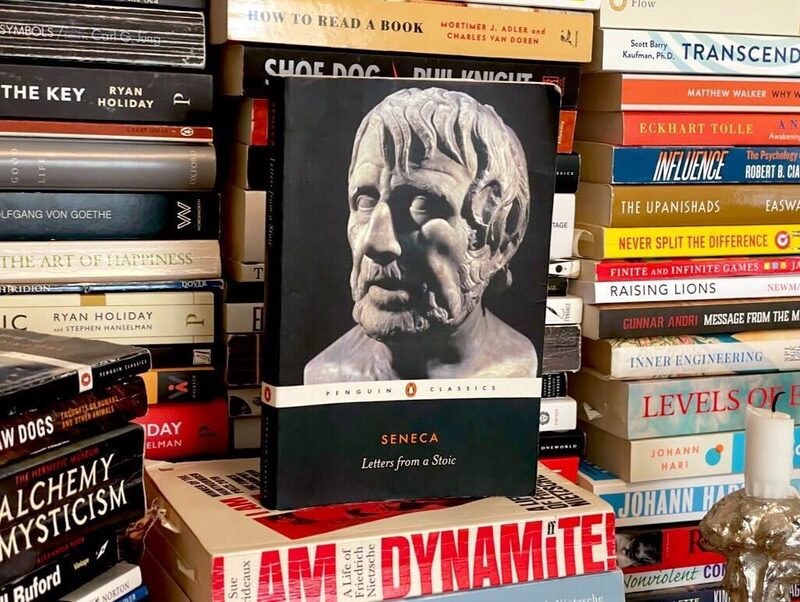
Letters from a Stoic
"If one does not know to which port one is sailing, no wind is favorable."
Do you have a philosophy of life? If not, then the Stoics can provide a great foundation for you to build upon. A philosophy of life can protect us from the whims, vices, and "flavor of the day"-type of living often favored by the masses — and "without one nobody can lead a life free from fear and worry."
About the Book
The book is compiled of letters of correspondence between the stoic philosopher Seneca and his friend Lucilius. It contains intimate conversations on a wide variety of topics: how to live the good life, friendship, old age, simple living, grief, and how to deal with hardships.
What strikes me with Seneca's writing is how clear and powerful it is. It's also charming in the way he combines wisdom of old age and youthful enthusiasm.
Voluntary Discomfort
"Set aside now and then a number of days during which you will be content with the plainest of food, and very little of it, and with rough, coarse clothing, and ask yourself, 'Is this what one used to dread?' It is in times of security that the spirit should be preparing itself to deal with difficult times…"
By depriving ourselves of basic comforts we can prepare for tough times, learn to appreciate what we have, and eliminate irrational fears.
Impermanence & Negative Visualization
Negative Visualization is the habit of from time to time imagining horrible things happening — to ourselves and our loved ones — in order to prepare the spirit for adversity.
In my favorite letter from the book, Seneca talks about the impermanence of the world. His friend has seen his whole city burn to the ground in a single day. Seneca admits that even though, as a stoic, we are taught to practice Negative Visualization, we often ignore Black Swans — terrible things that happen on an unprecedented scale. We need to imagine unlikely yet plausible events of absolute annihilation of everything we hold dear, to prepare emotionally should it actually happen.
Video Review
⭐️ Takeaway
Adversity and suffering is part of nature, and in order to live in accordance with nature we will have to accept this fact. Preparing for adversity in good times is one of the best ways to keep a cool head when it's most needed — for yourself and those who depend on you.
⚖️ Verdict
I owe a lot to the stoics and I'm glad I finally read this book. While some letters were irrelevant to me (i.e. rants about the use of excessive language), the bulk of the book is filled with timeless life lessons. Emerson urged us to "create our own Bible" where we collect the words of wise people that touched our souls. If I made a book like that, Seneca would be mentioned more than once!