Why You Should Read Books That Confuse You
Confusion Is the Workout
If a book ever makes you feel stupid, that might mean you've chosen the right book. Most people stop reading the moment they become confused — they feel like it's too hard for them. But confusion might just be the most valuable part of reading.
"When you're reading a book and you're confused, that confusion is similar to the pain that you get in the gym when you're working out, but you're building mental muscles instead of physical muscles." — Naval Ravikant
Most people treat confusion as a stop sign, but it's actually the workout.
My Journey from Accessible to Challenging
When I first started reading seriously about 11 years ago, I was mostly reading quite accessible books — habits, productivity, popular psychology. There's absolutely nothing wrong with those types of books. But after a while, I felt curious about trying something more challenging.
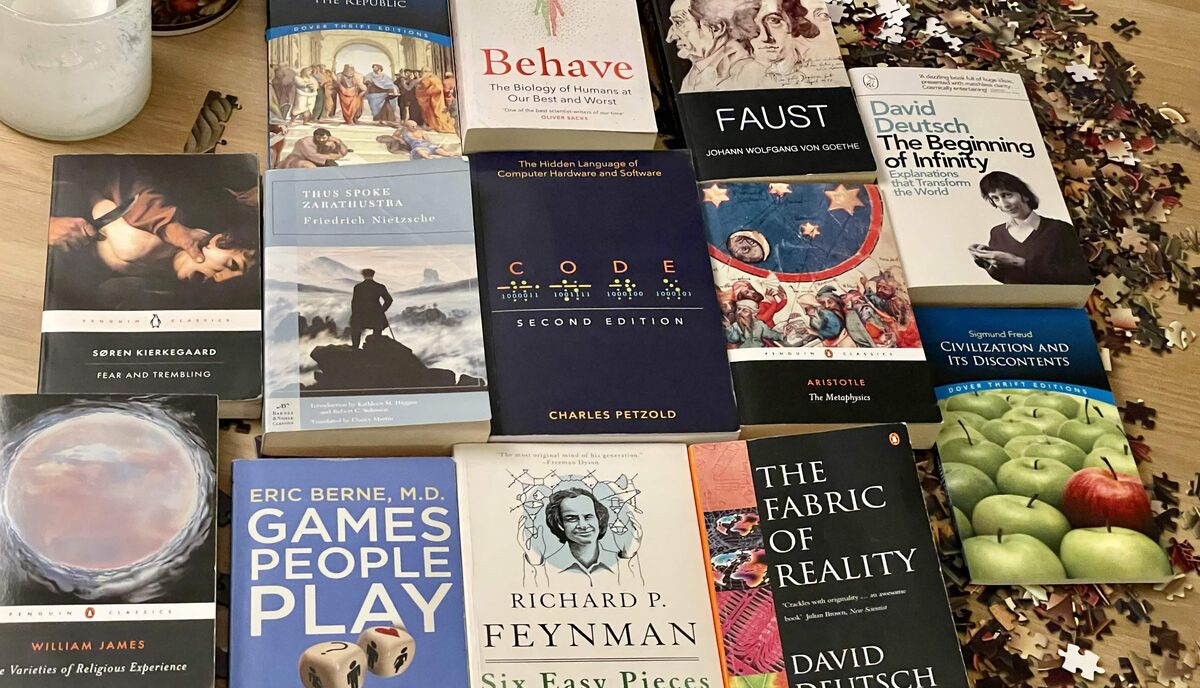
The first time I picked up books like Behave by Robert Sapolsky, Games People Play, David Deutsch's The Beginning of Infinity, or William James' The Varieties of Religious Experience — I felt completely lost. There were pages where I had absolutely no idea what was going on.
Old books like Plato's The Republic felt intimidating. Freud — just the name is intimidating. Nietzsche's Thus Spoke Zarathustra was so challenging I had to watch a video companion series alongside each chapter.
What Happened When I Kept Going
When these books confused me, I assumed the problem was with me — that I just wasn't smart enough. But something interesting happened when I kept reading anyway: the books didn't change, but my brain started to adapt.
Think about how the gym works. You don't want to lift weights that feel easy. You want to lift weights that feel slightly too heavy. That's how you get the gains. Reading works the same way.
Difficult books force you to slow down, reread sections, think hard, and connect ideas. That mental effort is what actually builds understanding. And here's the fascinating part: it compounds over time.
After years of reading like this, almost no book intimidates me anymore. Not because I understand everything, but because I'm comfortable with being confused. I trust the process.
A Quick Test for You
Think about the last five books you read. Write them down. Now ask yourself:
- Was any of them difficult?
- Did they force you to reread certain pages?
- Did they introduce concepts you didn't fully grasp?
If the answer is no, then maybe you're staying too much inside your reading comfort zone.
The Rule That Helped Me
Every year, pick a few books — maybe three — that are slightly outside your depth. Not books that are impossible, but books that force you to stop and think. Books where you can expect to only understand 60–70% the first time. Accept that. That's normal. Understanding compounds over time.
Books Mentioned in This Video
⭐️ Takeaway
The goal is not to feel smart. The goal is to become smarter over time.
And that often starts with a book that makes you feel confused. Don't let confusion have you shy away from books that will give you the most growth possible.