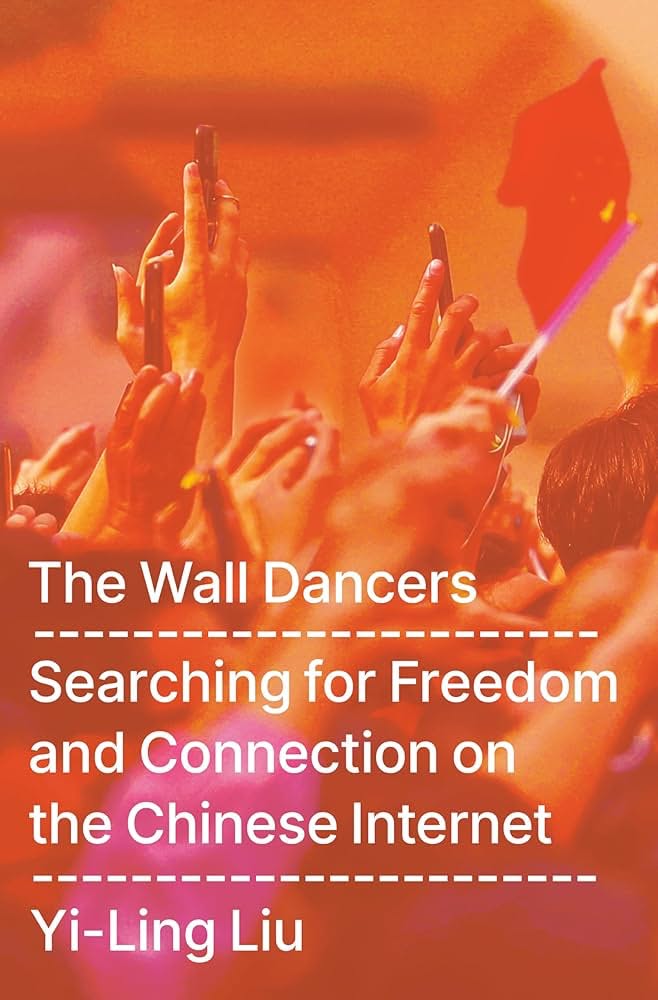
The Wall Dancers: Searching for Freedom and Connection on the Chinese Internet
A Taste of Freedom, Then a Cage
Imagine growing up believing that the internet would set you free — and then slowly watching it turn into a cage. In 2017, there were an estimated 5.3 million Chinese websites. By 2022, that number had dropped to 3.9 million. A third of the pages were gone.
"It seems a monster is devouring web pages along the timeline of history."
The Wall Dancers gives us a peek behind the curtain of the joy and sorrows of the Chinese internet. It tells the story by the people who lived it — the dreamers, the rebels, the nationalists, the coders. It shows how a space that once felt radically open slowly became engineered, optimized, and controlled, and how young people adapted, resisted, or caved in.
The Hope of Opening Up
The part of this book that really lingered with me was the hope that was instilled by China opening up to the world after reforms by Deng Xiaoping. China would finally connect to the global economy. The Chinese youth got their hands on music from the West. New subcultures emerged. Youth culture became a thing — and this was the same time as the Chinese people hooked up to the internet for the first time, experiencing this new tool for communication and freedom.
This was an energetic time. This was a creative time.
The Tide Turns
But only ten years or so later, the censorship, the shutting down, the limiting of what you could talk about came back in full force. This is the ebb and flow of the Chinese internet.
During the financial crisis of 2008, China became disillusioned with their role versus the US. China had to lend their support and help the US during this time, and they realized they could stand pretty well on their own two feet.
"Maybe it's time for the US to learn from us — and not the other way around."
As a result of this newfound confidence and national pride, Chinese youth started to criticize the West for fake news about their country. Just like the new hip-hop artists of the internet era had criticized state media for their hypocrisy, now they were attacking the West, accusing big western media companies of portraying China in an unfair way.
The Crackdown
In the 2010s, China doubled down on censorship, upped the propaganda, and limited what life could mean for its citizens. Censors weren't just removing posts from popular social media platforms and community sites — they were shaping visibility and redirecting attention. Rewarding safe content while silencing risky voices.
Posts disappeared. Accounts vanished. Messages could be deleted as they were written. And slowly the wild internet became something engineered.
Laying Flat
One of my big takeaways from this book is that it really takes a toll on people to get a taste of freedom only to have it taken away. This was especially hard for the internet natives.
Many youths just gave up. "Laying flat" became a cultural phenomenon in China — a more hardcore version of the quiet quitting trend we've seen in the West. It's opting out of ambition fully.
Others saw migration as their only hope for a worthy life. But those who couldn't vote with their feet instead voted with their genitals — having no children would at least deplete the country of people to suppress.
🔑 Key Takeaway
If the tools that the Chinese government uses to suppress opinion, reward loyalty, and crush opposition work this successfully — you can bet that your government is copying one or two things from those tools and applying them to you right now.
Video Review
⚖️ Verdict
This is a book full of stories, told from the people's point of view — struggling musicians, people in marginalized groups, entrepreneurs trying to build businesses. It has a lot of breadth and it really informed me about Chinese culture, especially Chinese internet culture, in a way I found very interesting.
This is a quite new book. I don't read many new books, but I really enjoyed this one. It's a sweet read. And if you want a glimpse of Chinese internet culture and history, this is the book for you.